Tag: AI
Breaking the Silos: How a Federated Europe Could Solve the Sepsis Puzzle
The landscape of critical care research is currently hindered by "data silos"—isolated pockets of patient information that are difficult to share due to privacy concerns and technical incompatibility. This narrative review... read more
AI Foresees the Squeeze: Machine Learning Predicts Vasopressor Needs Hours Ahead in Sepsis Patients
This proof-of-concept retrospective study, utilizing the MIMIC-IV v2.2 database (2008–2019), demonstrates that an interpretable machine learning model based on routinely collected electronic health record data from ICU... read more
RealMIP: The AI That Sees Death Coming in Real Time
A groundbreaking new framework called RealMIP finally cracks the long-standing problem of real-time mortality prediction in chaotic ICU data streams riddled with missing values and irregular sampling. By combining cutting-edge... read more
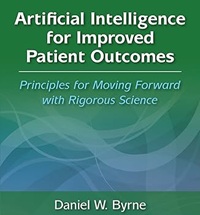
Artificial Intelligence for Improved Patient Outcomes: Principles for Moving Forward with Rigorous Science
Artificial Intelligence for Improved Patient Outcomes provides new, relevant, and practical information on what AI can do in healthcare and how to assess whether AI is improving health outcomes. With clear insights and a... read more
AI Spots Deadly Sepsis Clotting Crisis Hours Earlier – Now Live as a Free Web Tool
In a large multi-center retrospective study using the MIMIC-IV and eICU-CRD databases, researchers developed an interpretable machine learning model to predict sepsis-induced coagulopathy (SIC) within 7 days of ICU admission.... read more
Predictive Power: Wearable AI Foreshadows Hospital Deterioration
This study successfully developed and validated a deep learning-based continuous in-hospital deterioration prediction model using data collected from wearable chest-worn monitors. The researchers piloted two different Continuous... read more
DeLLiriuM: LLMs Predict Delirium Risk in the ICU
DeLLiriuM is a novel large language model (LLM) designed to predict delirium in Intensive Care Unit (ICU) patients after the initial 24 hours of admission, using structured electronic health records (EHR). What sets DeLLiriuM... read more
Predicting Transfusion Risks to Power Safer Blood Management
This systematic review analyzed the use of Artificial Intelligence (AI) models over the past decade in identifying and predicting Adverse Transfusion Reactions (ATRs) and their implications for clinical management. The... read more
AI Alert: Machine Learning Predicts Septic Shock Early in the ICU
This study developed and successfully validated a machine learning (ML) model designed to provide an early prediction of septic shock in intensive care unit (ICU) patients diagnosed with sepsis. Best Performer: Out of... read more
AI Reinforcement Learning Slashes Kidney Injury Risk After Surgery
This study explored the use of Reinforcement Learning (RL)-a type of artificial intelligence—to personalize hemodynamic management (managing blood flow and pressure) in the intensive care unit (ICU) immediately following... read more
Machine Learning Can Effectively Identify Septic Patients with AKI
Causal Machine Learning (ML) framework outperformed random forest model in identifying patients with AKI and sepsis who benefit from restrictive fluid therapy. This provides a data-driven approach for personalized fluid management... read more
Predicting the Next 48 Hours: Machine Learning Delivers Dynamic, Interpretable ICU Mortality Forecasts
The LGBM-48h algorithm provides a dynamic, clinically applicable, and interpretable framework for 48-hour ICU mortality risk prediction. By establishing mortality risk-based categories and showing how key features change... read more
Precision Hydration: Causal Machine Learning Pinpoints Sepsis-AKI Patients Who Thrive on Less IV Fluid
The results of this study demonstrate that a causal machine learning (ML) framework can successfully identify patients with sepsis-AKI who benefit from a restrictive fluid strategy. This technology offers a promising, data-driven... read more
ICU Readmission Prediction Using Deep Learning Models
This systematic review provides the first comprehensive synthesis of the literature on the application of deep learning (DL) models to the task of predicting ICU readmission, offering insights into current approaches and... read more
The Power and Pitfalls of AI: GPT Masters ICU Prediction But Struggles with ED Discharge
This retrospective proof-of-concept study investigated GPT-4o's ability to predict disposition (admission vs. discharge) for high-acuity ED patients with complex respiratory cases who required pulmonology consultation and... read more
Beyond SOFA: Sepsis ImmunoScore Redefines Risk Stratification for Mortality and ICU Admission
This multicenter observational study involving over 6,000 adult patients found that the Sepsis ImmunoScore, an AI-based tool, significantly outperformed six conventional clinical scores and biomarkers in predicting sepsis,... read more
Predicting Mortality in Sepsis-Related ARDS Using Machine Learning
The application of machine learning methodologies to construct prognostic prediction models for sepsis patients complicated by ARDS, informed by the new global definition, proves to be reliable. This approach can assist clinicians... read more
Enhancing Early Mortality Prediction for Sepsis-associated ARDS Patients Using Machine Learning
This study utilized the MIMIC-IV, eICU CRD, and NWICU databases to construct and validate a machine learning model, SAFE-Mo, which predicts early mortality in patients with sepsis-associated acute respiratory distress syndrome... read more
Using AI to Detect and Treat Delirium
The prevention of delirium in ICU represents a major unmet need because of its high prevalence, under-diagnosis, and independent association with adverse outcomes including higher mortality and accelerated cognitive decline.... read more
Unsupervised Multi-modal ML Approach for Robust CPR Signal Denoising
The significance of denoising biomedical signals, particularly in crucial life-saving interventions like cardiopulmonary resuscitation (CPR), cannot be overstated, as the accuracy and reliability of CPR data can be a matter... read more
Machine Learning Model for Predicting Acute Pancreatitis Mortality in the ICU
Machine learning model has been proved to be superior to existing prediction scores for mortality prediction of Acute Pancreatitis (AP). The use of most of previous ML models is limited in clinical practice, mainly due... read more
Predicting MODS in Trauma-induced Sepsis with Machine Learning Models
The nomogram and machine learning models provide enhanced predictive accuracy for multiple organ dysfunction syndrome (MODS) in trauma-induced sepsis patients compared to traditional scoring systems. These tools, accessible... read more