
Eye Care and Microbial Overgrowth in the ICU
Patients undergoing prolonged mechanical ventilation face silent risks that extend far beyond their lungs, including exposure keratopathy (EK), a condition where the eyes fail to close properly, and opportunistic conjunctival... read more
Tracking the Dynamic Workload of Critical Care
This retrospective cohort study utilized latent class trajectory modeling to identify distinct patterns of nursing intensity (NI) during the first week of an intensive care unit (ICU) stay and evaluate their links to patient... read more
Tailored Tube Feeding: Personalized Nutrition Strategy Speeds Up Recovery for Elderly ICU Patients
Elderly patients on mechanical ventilation in the intensive care unit (ICU) face a heightened risk of malnutrition and associated complications, yet standard feeding practices often fail to address their unique physiological... read more
Oxford Textbook of Critical Care
The thoroughly revised 2nd edition of the Oxford Textbook of Critical Care is a comprehensive multi-disciplinary text covering all aspects of adult intensive care management. Uniquely the book takes a problem-orientated approach... read more
What Drives Organ Donation Decisions in the ICU?
Despite the lifesaving potential of organ transplantation, a severe shortage of available organs persists worldwide. Because the family members of intensive care unit (ICU) patients hold the critical power of consent, understanding... read more
Navigating Corticosteroid Therapy for Immunocompromised Patients with Severe Pneumonia
For immunocompromised patients admitted to the intensive care unit (ICU) with severe community-acquired pneumonia (sCAP), the decision to administer adjunctive corticosteroid therapy is uniquely precarious. While corticosteroids... read more
How nEMR3 Spotlights Early Sepsis and Tracking Survival
This single-center ICU study conducted at Sir Run Run Shaw Hospital evaluated neutrophil EMR3 (nEMR3), a biomarker calculated by normalizing a patient's neutrophil EMR3 median fluorescence intensity to healthy controls, as... read more
Textbook of Acute Trauma Care
This book provides a systemic approach to acute trauma care in line with the ABCDE paradigm and up-to-date information on assessing and managing major trauma from the pre-hospital to the rehabilitation phase. The book's... read more
The Penicillin Paradox: Overcoming Allergy Labels and Barriers to Desensitization in the ICU
While roughly 10% of patients carry a penicillin allergy label, formal testing reveals that over 90% of these labels are completely inaccurate. In ICUs, where severe infections demand urgent, optimal treatment, this mislabeling... read more
The 2026 PoCLUS Consensus Update
Since the landmark 2012 consensus on point-of-care lung ultrasound (PoCLUS), a vast wave of new evidence has transformed clinical practice. To address these advancements, a new consensus has been established to update recommendations,... read more
High Stakes in the ICU: Machine Learning Pinpoints Patients Facing the Highest Odds
This large-scale registry study leveraged interpretable machine learning to identify distinct, high-risk subgroups of intensive care unit (ICU) patients with a six-month post-admission mortality rate of 80% or higher. Utilizing... read more
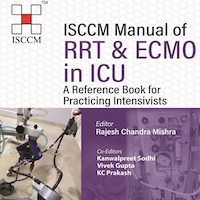
ISCCM Manual of RRT and ECMO in ICU: A Reference Book for Practicing Intensivists
The topics were chosen to make the reader understand comprehensive management of therapies including organization, communication and other administrative issues including cost-effective therapies. This will help the practicing... read more
How Muscle Signals and Strength Chart the Path Out of ICU Weakness
This single-center observational study evaluated the utility of combining handgrip strength (HGS) and surface electromyography (sEMG) to objectively monitor neuromuscular function and early rehabilitation in intensive care... read more
Unmasking Candidemia: Three Profiles, Divergent Fates
This multicenter retrospective study investigated the clinical heterogeneity of candidemia in critically ill patients to identify distinct clinical phenotypes and evaluate their 90-day mortality. Analyzing 492 intensive care... read more
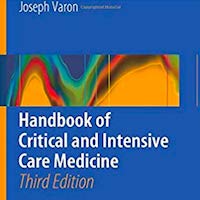
Handbook of Critical and Intensive Care Medicine
The latest edition of this handbook is a concise yet comprehensive guide for attending physicians, fellows, residents, and students who cover the ICU. The chapters follow an outline format and are divided by organ system,... read more
AI Foresees Sudden Oxygenation Loss in ICU Patients 72 Hours Ahead
Researchers developed and internally validated a machine-learning clinical decision support system designed to predict rapid oxygenation deterioration in mechanically ventilated ICU patients. Retrospective data from a... read more
Simplified 17-Variable Model Predicts Deadly Inflammation
Patients with Acute Respiratory Distress Syndrome (ARDS) can be categorized into hyperinflammatory (high inflammation) and hypoinflammatory (low inflammation) phenotypes to help predict outcomes. This retrospective cohort... read more
How ARDS Fuels Delirium in the ICU
This systematic review and meta-analysis evaluated 13 studies (encompassing 10,052 patients) to understand the relationship between Acute Respiratory Distress Syndrome (ARDS) and delirium. Delirium is remarkably common,... read more
Personalizing Tachycardia to Predict ICU Mortality
Traditional Systemic Inflammatory Response Syndrome (SIRS) criteria define tachycardia as a heart rate (HR) > 90 beats per minute. However, this static number is a poor screening tool for severe conditions like sepsis due... read more
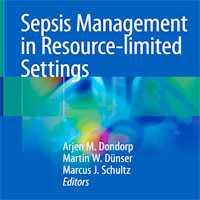
Sepsis Management in Resource-limited Settings
This book is open access under a CC BY 4.0 license. It constitutes a unique source of knowledge and guidance for all healthcare workers who care for patients with sepsis and septic shock in resource-limited settings. More... read more
Rethinking Blood Thinners: Do Mild Brain Injuries Need Maxi Care?
The Brain Injury Guidelines (BIG) classify traumatic brain injuries (TBIs) into three tiers to dictate treatment. Patients taking pre-injury blood thinners (anticoagulants or antiplatelets) are automatically upgraded to the... read more
Tailoring the Breath: Personalized PEEP for ARDS Subphenotypes
Acute respiratory distress syndrome (ARDS) varies wildly between patients, leading to unpredictable outcomes and inconsistent responses to ventilator settings like Positive End-Expiratory Pressure (PEEP). Researchers used... read more