Tag: ICU
Supine Body Position As a Risk Factor for Nosocomial Pneumonia in Mechanically Ventilated Patients
The frequency of clinically suspected nosocomial pneumonia was lower in the semirecumbent group than in the supine group. This was also true for microbiologically confirmed pneumonia. Supine body position were independent... read more
Big Data to Help Predict Individual Trauma Patient Outcome
Chinese researchers are using big data to help identify trauma patients who could experience potential adverse health events in the emergency department through the aid of a clinical decision support system. It was developed... read more
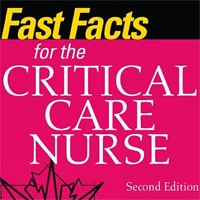
Fast Facts for the Critical Care Nurse
This newly updated, quick-access guide for critical care nurses covers the most common admitting diagnoses and reviews their causes, signs and symptoms, and interventions. Critical care nursing requires astute assessment,... read more
Low-dose Dopamine in Patients with Early Renal Dysfunction
Administration of low-dose dopamine by continuous intravenous infusion to critically ill patients at risk of renal failure does not confer clinically significant protection from renal dysfunction. The groups assigned dopamine... read more
Characteristics of Hospitalized Adults With COVID-19 in California
Coronavirus disease 2019 (COVID-19) has resulted in increased hospital and intensive care unit (ICU) use. In the United States, few reports have characterized patients treated outside of the ICU. Northern California was... read more
Patient Self-proning with HFNC Improves Oxygenation in COVID-19 Pneumonia
A high-flow nasal cannula (HFNC) is commonly used in the management of hypoxic respiratory failure, and is associated with more ventilator-free days and lower mortality compared with standard oxygen therapy or non-invasive... read more
Constantly Shifting Strategies for COVID-19
We are all learning as we go, but we are seeing more than 200 COVID-19 patients every day in our emergency department in Queens, NY, and this is what we are doing to evaluate and treat patients, keep everyone safe, and boost... read more
COVID-19 and Critical Care
In this podcast, we talk about the clinical journey of a COVID-19 patient and some insights from the critical care unit. There are some concepts here that we probably don't do full justice to in the time we had, so here are... read more
Addressing Anxiety Among Health Care Professionals During COVID-19
The coronavirus disease (COVID-19) pandemic has become one of the central health crises of a generation. The pandemic has affected people of all nations, continents, races, and socioeconomic groups. The responses required,... read more
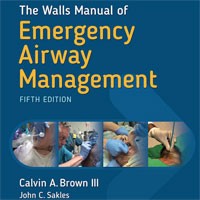
The Walls Manual of Emergency Airway Management
The Walls Manual of Emergency Airway Management is the world's most trusted reference on emergency airway management, and is the foundation text in the nationally recognized The Difficult Airway Course: Emergency and The... read more
Critical Care / ICU, Fluids, Electrolytes and Nutrition
Filled with detailed work-ups, treatments, pearls, illustrations, differential diagnosis and references. Everything you ever needed to know about critical care and nutrition issues in an easy to read and navigate format created... read more
ICU Doctors Already Know How to Get COVID-19 Patients Off Ventilators Faster
The coronavirus pandemic is instilling chaos that is shaking the world. When intensive care units are running out of ventilators and essential medications, and some 95,000 people die in a matter of a few months, society panics... read more
Cardiologists Join COVID-19 Front Line in Converted Cardiac ICUs
The Mount Sinai Health System in New York is one of many systems in the U.S. that has been adapting in the attempt to care for the influx of patients with known or suspected COVID-19. As elective surgeries are no longer... read more
Yale study finds self-isolation would dramatically reduce ICU bed demand
As soon as Alison Galvani learned of the COVID-19 virus in China and its devastating spread there, she foresaw what might happen to healthcare facilities in the United States. The Yale professor and colleagues at the... read more
What We Do When a COVID-19 Patient Needs an Operation
We wish to share the protocol that we use in our hospital in preparing an operating room (OR) for confirmed or suspected COVID-19 patients coming for surgery. An OR with a negative pressure environment located at a corner... read more
Inside a South Korean COVID-19 ICU
In a South Korean ICU, nurses wearing heavy self-contained respiratory systems work two-hour shifts. South Korea has seen a great success mitigating its large COVID-19 outbreak. South Korea has 12.3 hospital beds per... read more
A Comparison of Albumin and Saline for Fluid Resuscitation in the ICU
In this randomized trial, we found that the use of 4 percent albumin or normal saline for intravascular volume resuscitation in a heterogeneous population of patients in the ICU resulted in equivalent rates of death from... read more
Emergency Department Surge Capacity Strategies in the COVID-19 Pandemic
No matter where you practice emergency medicine there will be, or has been, capacity problems in the COVID-19 crisis. Even if we "flatten the COVID-19 curve" there will be a load on the systems that exceeds our capacity.... read more
Characteristics and Outcomes of 21 Critically Ill COVID-19 Patients in Washington State
This study represents the first description of critically ill patients infected with SARS-CoV-2 in the US. Patients with confirmed SARS-CoV-2 infection (positive result by polymerase chain reaction testing of a nasopharyngeal... read more
Models of Peer Support to Remediate Post-Intensive Care Syndrome
A number of different models of peer support are currently being developed to help patients and families recover and grow in the post-critical care setting. Via an iterative process of in-person and email/conference calls,... read more
Humanizing the ICU Experience with Enhanced Communication
Decisions to limit therapy (DTLT) are routine for ICU physicians. Although breaking bad news is one of the most difficult tasks clinicians face, ongoing communication is even more crucial as families (not necessary following... read more
Focus on Clinical Trial Interpretation
In a recently published meta-epidemiological study of 604 randomised clinical trials (RCTs) published between 1977 and 2018 from 53 Cochrane systematic reviews in critical care, less than 7% of the RCTs had overall low risk... read more