Tag: infection
WHO Declares the Coronavirus Outbreak a Pandemic
The World Health Organization on Wednesday declared the rapidly spreading coronavirus outbreak a pandemic, acknowledging what has seemed clear for some time — the virus will likely spread to all countries on the globe. Director-General... read more
Simple Math Offers Alarming Answers About COVID-19 in US
Much of the current discourse on the COVID-19 outbreak focuses on comparisons of the total caseload and total deaths with those caused by seasonal influenza. But these comparisons can be deceiving, especially in the early... read more
Where There Is No Doctor: A Village Health Care Handbook
This updated reprint features updated medication information, a newly revised family planning chapter, new treatments for a variety of infections, and more. All Hesperian books are regularly updated and reprinted to reflect... read more

What If a COVID-19 Patient Needs a Surgery?
In the week of February 13–19, the World Health Organization reported that Singapore had more cases of COVID-19 than any other country outside of mainland China. We wish to share the protocol that we use in our hospital... read more
Coronavirus Readiness and Community Resilience
It is now clear to public health experts that the novel coronavirus epidemic in Washington State and other parts of the country is accelerating. The time has come for us to work together as a community to minimize the impact... read more
Severe Influenza in Critically Ill Patients
The present review summarizes current knowledge on pathogenesis and clinical manifestations of severe influenza. Immunological dysfunction during viral infection correlates with severity and mortality among ICU patients.... read more
One Doctor’s Life on the Coronavirus Front Lines
Driving one evening in Wuhan, China, last month, Zhang Xiaochun pulled her car to the side of the road. She was on the verge of a breakdown. She'd been working nonstop for days at the center of China's coronavirus outbreak,... read more
COVID-19 Situation in Japan
Dr Adrian Wong speaks to Prof Satoru Hashimoto on the #COVID19 situation in Japan in this ESICM podcast. Dr Adrian Wong is a consultant in critical care in King’s College Hospital, London. He is the chair of the Editorial... read more
Review of the Current Evidence on COVID-19 in Intensive Care
Join Dr. David Lyness as he discusses the current evidence on COVID-19 in Intensive Care. A coronavirus is one of many viruses that cause diseases in mammals and birds. In humans, coronaviruses cause respiratory tract... read more
How to Save Lives in a COVID-19 Pandemic
The pace of COVID-19, the ongoing novel coronavirus outbreak, has been astonishing, and it is inevitable that this will become a pandemic, if it hasn't already. When a disease is a pandemic, it considered to be an ongoing... read more
Clinical Characteristics of Coronavirus Disease 2019 in China
During the first 2 months of the current outbreak, Covid-19 spread rapidly throughout China and caused varying degrees of illness. Patients often presented without fever, and many did not have abnormal radiologic findings. The... read more
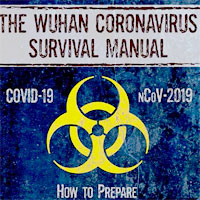
The Wuhan Coronavirus Survival Manual: How to Prepare for Pandemics and Quarantines
Panic over the coronavirus that originated in Wuhan, China is becoming more widespread and people are frantically getting prepared for the possibility of a deadly pandemic that could span the globe. Things like N95 masks... read more
Alton’s Antibiotics and Infectious Disease: The Layman’s Guide to Available Antibacterials in Austere Settings
Alton's Antibiotics and Infectious Disease is a unique simplified guide to using antibacterial and antifungal veterinary medications. It is meant to help the non-medical professional in disaster, survival, and other austere... read more
Severe SARS-CoV-2 Infections: Practical Considerations for Intensivists
On December 31, 2019, China reported cases of respiratory illness in humans appearing first in Wuhan, Hubei Province, that involved a novel coronavirus SARS-CoV-2 (aka 2019-nCoV). This new emergency is a zoonotic disease... read more
COVID-19 Webinar
Access the recording and hear the discussions which give clear insight into the situation in China and Europe, advice on how hospitals should respond and what can be learned from the experience in Mainland China. Guest... read more
Critical Care Response to a Hospital Outbreak of the 2019-nCoV Infection in Shenzhen, China
Beginning at early December 2019, there is an outbreak of a novel 2019-nCoV in Wuhan, China. Then, Public Health Emergency of International Concern (PHEIC) was declared on 30 January 2020, by the World Health Organization... read more
New Genomic Tests Aim to Diagnose Deadly Infections Faster
Rapid genomic tests are poised to change the way doctors diagnose and treat infections, but their cost may limit widespread use. Ryan Springer's mystery illness began last summer with a dull ache in his chest. Over the... read more
Empirical Anti-MRSA Therapy Not Associated with Reduced Mortality for Patients with Pneumonia
This study suggests that empirical anti-MRSA therapy was not associated with reduced mortality for any group of patients hospitalized for pneumonia. These results contribute to a growing body of evidence that questions the... read more
Guidelines for the Management of Septic Shock and Sepsis-Associated Organ Dysfunction in Children
A large cohort of international experts was able to achieve consensus regarding many recommendations for the best care of children with sepsis, acknowledging that most aspects of care had relatively low quality of evidence... read more
Should We Treat Fever in Critically Ill Patients Without Acute Brain Pathology?
In one of the sessions at #LIVES2019 in Berlin, Prof. Frank Van Haren of Canberra Hospital, Australia, presented findings from the Randomised Evaluation of Active Control of Temperature versus Ordinary Temperature Management... read more
ICU Bloodstream Infections Reduced by 80 Percent
Bloodstream infections acquired in UK Intensive Care Units (ICUs) reduced by 80% between 2007 and 2012, according to research funded by Biomedical Research Centres (BRC). The findings are based on data collected from over... read more
Early Identification of Disease Progression in Patients with Suspected Infection Presenting to the ED
In patients presenting to the emergency department (ED) with a suspected infection, the blood biomarker MR-proADM could most accurately identify the likelihood of further disease progression. Incorporation into an early sepsis... read more