
Tag: ultrasound
Doppler Ultrasound Identified Venous Congestion in Septic Shock
Venous congestion is a pathophysiological state where high venous pressures cause organ edema and dysfunction. Venous congestion is associated with worse outcomes, particularly acute kidney injury (AKI), for critically ill... read more
VA-ECMO in High-Risk Pulmonary Embolism
High-risk Pulmonary Embolism (PE) has an ominous prognosis and requires emergent reperfusion therapy, primarily systemic thrombolysis (ST). In deteriorating patients or with contraindications to ST, Veno-Arterial Extracorporeal... read more
Verticalization Therapy for ARDS Patients Receiving VV-ECMO
Persistent hypoxemia during veno-venous extracorporeal membrane oxygenation (VV-ECMO) for supporting acute respiratory distress syndrome (ARDS) patients is a clinical challenge for intensive care medical providers. Prone... read more
Fluid Responsiveness Evaluation with Integrated Ultrasonographic Approach
In a group of non-ventilated patients, who had already undergone the initial resuscitation, we demonstrated that the evaluation of the fluid responsiveness (FR) based on echocardiography and lung ultrasound increased the... read more
CEUS Value in Diagnosis of AKI in ICU patients
Ultrasound can assess renal perfusion, but its role in the evaluation of acute kidney injury (AKI) is still unclear. This prospective cohort study was to investigate the value of contrast-enhanced ultrasound (CEUS) in the... read more
Rescue TEE Might Diagnose Cardiac Arrest Faster
A Penn Medicine team is testing whether a new technology that gives live ultrasound images from inside a patient during CPR can help doctors get those answers faster. The device, called Rescue TEE, uses a tiny camera at the... read more
Diagnostic Accuracy of Point-of-Care Ultrasound for Shock
In this study, the identification of the etiology of shock by Point-of-Care Ultrasound (POCUS) was characterized by high sensitivity and a positive likelihood ratio, especially for obstructive shock. Hence, these findings... read more
Ultrasound-Guided Infraclavicular Axillary Vein vs. Internal Jugular Vein Cannulation in Critically Ill Mechanically Ventilated Patients
No difference was found between the real-time ultrasound-guided out-of-plane cannulation of the IJV and the infraclavicular real-time ultrasound-guided in-plane cannulation of the AXV. Both techniques are equally efficient... read more
Pronation Improves Respiratory Outcomes in Neonates with Respiratory Failure
This study found that 6-hour periods of pronation (lying on the stomach) can improve gas exchange and lung function in neonates (newborn infants) with three types of respiratory failure, without causing any negative effects... read more
Use of Cardiac POCUS in Diagnosis of HFrEF in a Patient with Ischemic Stroke
Ischemic strokes in younger adults, those 18 to 50 years old, account for approximately 10% to 15% of all ischemic strokes. Risk factors for stroke between younger and older patients tend to be similar. Younger patients... read more
Bedside PUG Positively Impact Efficiency and Cost Outcomes in the ICU
This study demonstrates bedside percutaneous ultrasound gastrostomy (PUG) leads to decreased Length of Stay (LOS) and total hospital costs in patients with ventilator-dependent respiratory failure. Hospital costs were significantly... read more
Developing a Decision Instrument to Guide Abdominal-pelvic Imaging of Blunt Trauma Patients
Although computed tomography (CT) of the abdomen and pelvis (A/P) can provide crucial information for managing blunt trauma patients, liberal and indiscriminant imaging is expensive, can delay critical interventions, and... read more
Benchmarking Saliency Methods for Chest X-ray Interpretation
Saliency methods, which "explain" deep neural networks by producing heat maps that highlight the areas of the medical image that influence model prediction, are often presented to clinicians as an aid in diagnostic decision-making.... read more
A Decade of Progress in Critical Care Echocardiography
Critical care echocardiography (CCE) is now widely accepted by the critical care community as a valuable tool in the ICU and emergency department, and in perioperative settings. It allows rapid and accurate diagnosis,... read more
Principles of Critical Care
Quickly and accurately diagnose and treat the critically ill patient with guidance from the field's definitive text. Considered the field's definitive text, Principles of Critical Care offers unmatched coverage of the diagnosis... read more

Multi-Organ Point-Of-Care Ultrasound in AKI
Acute kidney injury (AKI) is a clinical syndrome caused by a multitude of hemodynamic, toxic, and structural insults to the kidney, and portends worse patient outcomes. Despite careful history taking, physical examination,... read more
Lung Ultrasonography Beyond the Diagnosis of Pediatrics Pneumonia
Pneumonia is a prevalent disease with considerable morbidity and mortality among the pediatric population. Early diagnosis and swift commencement of the correct treatment are vital for a favorable clinical outcome. Along... read more
Patients’ Perspectives on Point-of-Care Diagnostics in Acute COPD Exacerbations
Patients' perspectives showed that point-of-care diagnostics and treatment of acute COPD in exacerbation was considered a qualitative offer by the patients and their relatives. At the same time, it was crucial that the emergency... read more
POCUS and Digital Tomosynthesis Correlation When Used with COVID-19 Pneumonia Patients
Point-of-care ultrasound (POCUS) in primary care has good sensitivity and specificity when compared to digital tomosynthesis as regards the diagnosis of COVID-19 pneumonia in patients with the clinical suspicion of pulmonary... read more
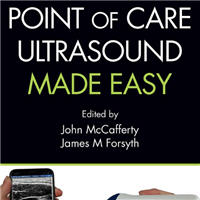
Point of Care Ultrasound Made Easy
Point of Care Ultrasound Made Easy is an exciting and innovative book that aims to teach all healthcare professionals how to do simple and clinically relevant ultrasound scanning at the point of care. This book will help... read more
The Value of Echocardiography Combined with Lung Ultrasound to Evaluate COVID-19 Pneumonia
In COVID-19 pneumonia patients, the pulmonary arterial pressure and LUS are positively correlated. For those who are unable to be transferred or relocated, the pulmonary arterial pressure may be measured to reflect the degree... read more
Image-Guided Management of COVID-19 Lung Disease
This book offers a detailed and up-to-date overview of image-guided diagnostics in COVID-19 lung disease. A range of image-guided CT and ultrasound procedures in different chest regions are described. For each procedure,... read more