
AKI and Mild Therapeutic Hypothermia in Patients After Cardiopulmonary Resuscitation
The aim of this study was to investigate the influence of mild therapeutic hypothermia (MTH) on the incidence of and recovery from acute kidney injury (AKI). Mild therapeutic hypothermia seems to have a protective effect... read more
The Myth of Vasopressors and Ischemia
Despite the widespread clinical use, and their well-documented life-saving properties, vasopressors are often maligned, accused of causing ischemia to fingers, toes, mesentery, kidneys, and so forth. Not only is the evidence... read more
Hemodynamic Support of Pediatric and Neonatal Septic Shock
Margaret Parker, MD, MCCM, speaks with Joseph A. Carcillo, MD, about the article, "American College of Critical Care Medicine Clinical Practice Parameters for Hemodynamic Support of Pediatric and Neonatal Septic Shock," published... read more
Trophic or Full Nutritional Support?
A two-phase approach for nutritional support may more appropriately account for the physiologic changes during critical illness than one-phase approach. Further evidence is awaited for the optimal protein amount during critical... read more
Hyponatremia and Death in Healthy Children From Plain Dextrose and Hypotonic Saline Solutions after Surgery
Standards of practice should be established for postoperative IV solutions that are used to hydrate patients, particularly children. The standards should acknowledge that the administration of solutions with saline in maintenance... read more
Severity of Sepsis-Associated Coagulopathy Predicts Hospital Mortality
atients with sepsis-associated coagulopathy appear to be at heightened risk of death, according to results of a large retrospective cohort study. The risk of death in the study increased with the severity of the sepsis-associated... read more
Effectiveness of targeted enhanced terminal room disinfection on hospital-wide acquisition and infection with multidrug-resistant organisms and Clostridium difficile
The hospital environment is a source of pathogen transmission. The effect of enhanced disinfection strategies on the hospital-wide incidence of infection has not been investigated in a multicentre, randomised controlled trial.... read more
High-Sensitivity Troponins and Outcomes After Myocardial Infarction
An excellent report from Kai Eggers et al in Sweden on impact of introducing high-sensitivity cardiac troponins in 87,879 patients with myocardial infarction. In a nationwide cohort study on patients with a first MI, the... read more
In vitro comparison of the adsorption of inflammatory mediators by blood purification devices
Septic shock, a leading cause of acute kidney injury, induces release of pro-/anti-inflammatory mediators, leading to increased mortality and poor renal recovery. This is the first in vitro study directly comparing three... read more
The Relationship Between ICU Hypotension and In-hospital Mortality and Morbidity in Septic Patients
Current guidelines recommend maintaining a mean arterial pressure (MAP)≥ 65 mmHg in septic patients. However, the relationship between hypotension and major complications in septic patients remains unclear. We, therefore,... read more
Social Media in Critical Care: What’s All the Fuss About?
The way we communicate and learn has been revolutionized by technology. Almost all of us carry a smartphone these days, so we are never more than a phone call, message or text away from family, friends and colleagues. This... read more
Evaluating the Cost-Effectiveness of Proportional-Assist Ventilation Plus vs. Pressure Support Ventilation in the ICU in Two Countries
The published reductions in asynchrony and length of stay in the ICU with proportional assist ventilation (PAV ventilation by Medtronic) led to shorter time on ventilation, and reduced incidence of ventilator-associated pneumonia... read more
Clinical Trial Participants’ Views of the Risks and Benefits of Data Sharing
In a survey of participants in clinical trials, most believe the potential benefits of data sharing outweigh potential negative consequences and are willing to share their data. Less than 8% of respondents felt that the potential... read more
The ABC’s of Palliative Care in the Emergency Department
Many of us have heard the saying that emergency medicine is the best 15 minutes of every other specialty. This, is in part, due to the wide breadth of disease and knowledge one must have to take care of patients. In emergency... read more
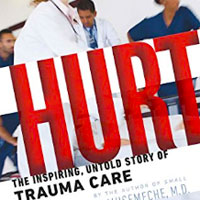
Hurt: The Inspiring, Untold Story of Trauma Care
Told through the eyes of a surgeon who has flown on rescue helicopters, resuscitated patients in trauma centers in Houston and Chicago, and operated on hundreds of trauma victims of all ages, Hurt takes us on a tour of the... read more
The Contemporary Timing of Trauma Deaths
In this study, the distribution of trauma deaths no longer appears to be trimodal. This may reflect advances in trauma and ICU care, and the widespread adaption of damage control principles. Early deaths, however, remains... read more
Case Files Emergency Medicine, Fourth Edition
Experience with clinical cases is key to mastering the art and science of medicine and ultimately to providing patients with competent medical care. Case Files: Emergency Medicine, Fourth Edition delivers 59 true-to-life... read more
Haemostatic Resuscitation in Trauma: The Next Generation
The next generation of haemostatic resuscitation aims at applying a ratio 1:1:1 driven strategy while using antifibrinolytics, haemostatic monitoring and avoiding critical fibrinogen deficiency by substitution. Mortality... read more
FIRST-line Support for Assistance in Breathing in Children (FIRST-ABC)
A multicentre pilot randomised controlled trial of high-flow nasal cannula therapy versus continuous positive airway pressure in pediatric critical care. Our pilot trial confirms that, following minor changes to consent procedures... read more
Patient Remains Awake for 90 Minutes of CPR
A man undergoing CPR, exhibited signs of conscious awareness for 90 minutes before the medical team stopped the life-sustaining procedure, according to a new case report. The 69-year-old man was admitted to a hospital in... read more
Automated System Detects Risk of VAP
Approximately 50 percent of all patients receiving mechanical ventilator support develop ventilator-associated pneumonia (VAP). Researchers at Massachusetts General Hospital (MGH) have developed an automated system for identifying... read more
Critical Decisions in Emergency Medicine
American College of Emergency Physicians regularly publishes Critical Decisions in Emergency Medicine to keep emergency medicine professionals up to date on relevant clinical issues. Build your clinical arsenal with Critical... read more