
The Life Cycle of Intensive Care Survivors
I started the Intensive care follow-up clinic to try to make sense of my work with critical patients and get feedback from their physical recovery. Over time, I verified that the patients presented not only physical effects,... read more
Haloperidol Prophylaxis in Critically Ill Patients with a High Risk for Delirium
The use of the delirium prevention protocol seems to result in improvement of several delirium outcome measures. Prophylactic treatment with low dose haloperidol in critically ill patients with a high risk of delirium likely... read more
Critical Care Pharmacists and Medication Management in an ICU Recovery Center
Many patients experience complications following critical illness; these are now widely referred to as post-intensive care syndrome (PICS). An interprofessional intensive care unit (ICU) recovery center (ICU-RC), also known... read more
The Randomized Educational ARDS Diagnosis Study
Radiographic criteria for acute respiratory distress syndrome have been criticized for poor reliability. Our objective was to test an educational intervention to improve the radiographic identification of acute respiratory... read more
Update of a Systematic Review of Autoresuscitation After Cardiac Arrest
Although case reports of autoresuscitation are hampered by variability in observation and monitoring techniques, autoresuscitation has now been reported in adults and children, and there appears to be a distinction in timing... read more
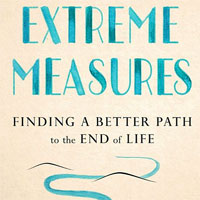
Extreme Measures: Finding a Better Path to the End of Life
In our current medical culture, the old and the ill are put on what she terms the End-of-Life Conveyor belt. They are intubated, catheterized, and even shelved away in care facilities to suffer their final days alone, confused,... read more
Teaching Internal Medicine Residents About Palliative Care
A survey of nearly 800 resident physicians suggested that 90% deemed their residency education on the topic to be inadequate; 25% did not feel comfortable discussing end-of-life care with patients. Teachable moments in medicine... read more
Comparison of Self-Reported and Behavioral Pain Assessment Tools in Critically Ill Patients
Self-reported and behavioral pain assessment scales are often used interchangeably in critically ill patients due to fluctuations in mental status. The correlation between scales is not well elucidated. The purpose of this... read more
Pressure Injuries and Sedation: Are they related?
Critically ill patients inherently have most of the risk factors for the development of pressure injuries. One of the key factors is immobility, which is very frequent in ICUs. This lack of mobility is enhanced by the administration... read more
Near-Infrared Cerebral Oximetry to Predict Outcome After Pediatric Cardiac Surgery
Increased SD of a smoothed cerebral tissue oxygen saturation signal and increased depth and duration of desaturation below the 50% saturation threshold were associated with longer PICU and hospital stays and with longer duration... read more
Research Aims to Fine-Tune Sepsis Diagnosis
Work designed to improve diagnosis of one of the leading causes of death in children is under way in Brisbane, led by a University of Queensland researcher. Mater Research Institute-UQ Associate Professor Luregn Schlapbach... read more
Should doctors be required to inform patients of their palliative care rights?
I overheard a colleague admit an 84-year-old woman to the hospital from the emergency department for a sizable mass in her uterus — no doubt, cancerous. I pictured a frail woman who’d been suffering for a while and was... read more
Effect of the Pulmonary Embolism Rule-Out Criteria on Subsequent Thromboembolic Events Among Low-Risk Emergency Department Patients
Does use of the pulmonary embolism rule-out criteria (PERC) in emergency department patients with low clinical probability of pulmonary embolism (PE) safely exclude the diagnosis of PE? Among very low-risk patients with suspected... read more
The Safety of a Novel Early Mobilization Protocol Conducted by ICU Physicians
There are numerous barriers to early mobilization (EM) in a resource-limited intensive care unit (ICU) without a specialized team or an EM culture, regarding patient stability while critically ill or in the presence of medical... read more
What Role Do Dogs Play in ICUs?
Dr. Megan Hosey PhD speaks about how dogs in the ICU can help lessen patients' pain & make them more hopeful. Getting people out of bed in intensive care units, even when they're being mechanically ventilated, is associated... read more
Are We Using IV Bags Properly?
In the months since Hurricane Maria, my hospital has dealt with an IV bag shortage. It turns out that might not be such a bad thing. Among the collateral damage of Hurricane Maria’s havoc on Puerto Rico is the shutdown... read more
The Great Lactate Debate
Over the last half-decade, there has been a distinct shift in the approach to lactate elevation. The long-held belief that elevated serum lactate requires tissue or cellular hypoxia has fallen away. Indeed, in sepsis, tissues... read more
Incidence of NV-HAP in the United States
Because nonventilator hospital-acquired pneumonia (NV-HAP) is understudied, our purpose was to determine the incidence, overall burden, and level of documented pneumonia preventive interventions of NV-HAP in 24 U.S. hospitals.... read more
Finding the Best Strategy to Improve Weaning Outcomes
Respiratory muscle dysfunction, being a common cause of weaning failure, is strongly associated with prolonged mechanical ventilation (MV) and prolonged stay in intensive care units. Strategies to improve weaning outcomes... read more
The effect of neuromuscular blockade on the efficiency of facemask ventilation in patients difficult to facemask ventilate
Facemask ventilation of the lungs can be an important rescue intervention in a "cannot intubate" scenario. We assessed the effect of neuromuscular blockade on expiratory tidal volumes in patients with expected difficulty... read more
Bike Rehab is Helping Critical Care Patients Along the Road to Recovery
Getting on the bike is a stepping stone into rehabilitation - you see that bike and you know then that you're getting better. You know you're not just going to lie in that bed and vegetate. So successful was the exercise... read more