Contrast-enhanced Imaging in the Emergency Department
We continue with the topic of Contrast-enhanced imaging in the emergency department. "What is the creatinine?" asks the radiologist when an emergency contrast-enhanced computed tomography (CT) is requested for a patient with... read more
Confirming a Pulse during Resuscitation
Much has been written about using ultrasound in cardiac arrest. The REASON study found that identification of cardiac standstill in PEA or asystole is correlated with almost no chance of meaningful recovery and can assist... read more
Prone Position in Intubated, Mechanically Ventilated COVID-19 Patients
During the COVID-19 pandemic, prone position has been widely adopted to treat mechanically ventilated patients with respiratory failure. The majority of patients improved their oxygenation during prone position, most likely... read more
Left Ventricular Unloading and ECpella Role
The main reason for the emergency implantation of venoarterial extracorporeal membrane oxygenation (VA-ECMO) is the restoration of adequate systemic perfusion, while protecting the failing heart and promoting myocardial recovery... read more
Effects of Ventilatory Rescue Therapies on the Cerebral Oxygenation of COVID-19 Patients
A new study by Masimo published in Critical Care evaluated the impact of a variety of rescue therapies on the systemic and cerebral oxygenation of mechanically ventilated COVID-19 patients suffering from acute respiratory... read more
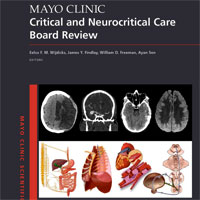
Mayo Clinic Critical and Neurocritical Care Board Review
Mayo Clinic Critical and Neurocritical Care Board Review is an all-inclusive review of the pathophysiology and care of the neurocritically ill and critically ill patient. The book reviews the core major critical care... read more
IVCDV is not a reliable indicator of preload responsiveness
During mechanical ventilation with Vt = 6 mL/kg, the effects of passive leg raising (PLR) can be assessed by changes in pulse pressure variation (PPV). If inferior vena cava diameter (IVCDV) is used, it should be expressed... read more
Effect of intubation timing on clinical outcomes of critically ill patients with COVID-19
The synthesized evidence suggests that timing of intubation may have no effect on mortality and morbidity of critically ill patients with COVID-19. These results might justify a wait-and-see approach, which may lead to fewer... read more
Technical Aspects and Clinical Applications in Lung Ultrasound
Lung ultrasound is increasingly used in emergency departments, medical wards, and critical care units—adult, pediatric, and neonatal. In vitro and in vivo studies show that the number and type of artifacts visualized change... read more
Hemodynamic Profiling utility using Pulmonary Artery Catheters in Cardiogenic Shock
PAC usage in cardiogenic shock (CS) is being revitalized by recent positive analyses of large registry and administrative databases. To realize the full potential of pulmonary artery catheters (PAC), more research is urgently... read more
Troponin Elevation in Non-cardiac Critical Illness
This article is about how to approach ischemia evaluation for the "non-cardiac" critically ill patient (someone admitted for a problem such as sepsis, stroke, or DKA). This is tough. We want to be thorough enough not to miss... read more
Comparison of Two Delayed Strategies for RRT initiation for severe AKI
Delaying renal replacement therapy (RRT) for some time in critically ill patients with severe acute kidney injury (AKI) and no severe complication is safe and allows optimisation of the use of medical devices. Major uncertainty... read more
Replacement of Fentanyl Infusion by Enteral Methadone Decreases the Weaning Time From Mechanical Ventilation
The introduction of enteral methadone during weaning from sedation and analgesia in mechanically ventilated patients resulted in a decrease in the weaning time from mechanical ventilation (MV). A double-blind randomized... read more
Could Physical Therapy Interventions Be Adopted in the Management of Critically Ill Patients with COVID-19?
As part of COVID-19 consequences, it has been estimated that 5% of patients affected by this disease will require admission to the intensive care unit (ICU), and physical therapy techniques have been implemented in patients... read more
Feasibility and Accuracy of ED Frailty Identification in Older Trauma Patients
This prospective study has demonstrated that screening for frailty in older major trauma patients within the Emergency Department is feasible and accurate using Clinical Frailty Scale (CFS). Patients age 65 years and... read more
Isavuconazole vs. Voriconazole for Antifungal Prophylaxis in Lung Transplant Recipients
Isavuconazole was effective and well tolerated as antifungal prophylaxis following lung transplantation. A single-center, retrospective study of patients who received isavuconazole (September 2015–February 2018) or voriconazole... read more
People with long-COVID at high risk of ongoing mental health issues
People living with long-COVID are at significant risk of experiencing depression and post-traumatic stress disorder (PTSD), according to research published in the European Respiratory Journal. The research is one of the... read more
Multicomponent Non-pharmacological Intervention on Delirium and Sleep Quality in SICU
Delirium is a deleterious condition affecting up to 60% of patients in the surgical intensive care unit (SICU). Few SICU-focused delirium interventions have been implemented, including those addressing sleep-wake disruption,... read more
24-Hour Esophageal pH Measurement in Mechanically Ventilated Children
The current study shows high incidence of gastroesophageal reflux on 24-hour esophageal pH-metry in mechanically ventilated children with medical diagnoses. The significance of this finding and its impact on ventilator-associated... read more
Drug Treatments for COVID-19
Corticosteroids and interleukin-6 inhibitors probably confer important benefits in patients with severe covid-19. Janus kinase inhibitors appear to have promising benefits, but certainty is low. Azithromycin, hydroxychloroquine,... read more
On Cytokines, Fluvoxamine and COVID-19
Early in the COVID-19 pandemic, the role of ‘cytokine storm’ in patients with severe course was raised. Indeed, this triggered multiple investigations centred around calming excessive inflammation with pharmacotherapies... read more
A Bad Sedation Package Leaves your Patient Trapped in a Nightmare
Pushing some ativan followed by vecuronium is no longer an acceptable strategy to manage post-intubation sedation. A good analgesia and sedation package is essential if you care about your patient's comfort and well-being.... read more