
Tag: guidelines
Guidelines for Tracheal Intubation in Critically Ill Adults
The Intensive Care Society, Faculty of Intensive Care Medicine, Difficult Airway Society and the Royal College of Anesthetists have combined to provide the "Guidelines for the management of tracheal intubation in critically... read more
R.E.B.E.L. EM – Fluid Responsiveness and the Six Guiding Principles of Fluid Resuscitation
Fluid resuscitation is a crucial aspect of emergency and critical care. Since the advent of the concept of early goal-directed therapy, we have placed a huge emphasis on aggressive fluid resuscitation in patients with severe... read more
Managing Sepsis and Septic Shock Current Guidelines and Definitions
While sepsis defies simple definition, it's generally understood to be a clinical syndrome caused by infection that may have profound adverse physiologic consequences. Although its precise incidence is unknown, sepsis is... read more
Factors Associated with Life-Sustaining Treatment Restriction in the ICU
Few previous studies have investigated associations between clinical variables available after 24 hours in the ICU and decisions to restrict life-sustaining treatment. The aim of this study was to identify factors associated... read more
Ultrasonography in Trauma: a Nation-wide Cross-Sectional Investigation
The Focused Assessment with Sonography in Trauma (FAST) protocol is considered beneficial in emergent evaluation of trauma patients with blunt or penetrating injury and has become integrated into the Advanced Trauma Life... read more
The ADRENAL Trial: Steroids in Septic Shock
Randomized clinical trials evaluating the efficacy of adjunctive corticosteroids in septic shock have shown conflicting evidence of clinical relevance. Two trials in particular looked at lower dose hydrocortisone (200mg/day)... read more
AACN Essentials of Critical Care Nursing
Endorsed by the American Association of Critical-Care Nurses (AACN) and written by top clinical experts in critical care nursing, this textbook covers all the must-know details on the care of adult, critically ill patients... read more
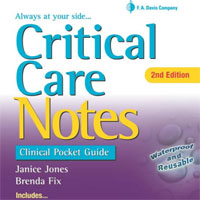
Critical Care Notes: Clinical Pocket Guide
This pocket-sized, quick reference is your go-to guide for the clinical information you need to care for adult patients safely and effectively. Completely revised and updated, the 2nd Edition offers even more of what you... read more
Enhancing Recovery From Sepsis
Survival from sepsis has improved in recent years, resulting in an increasing number of patients who have survived sepsis treatment. Current sepsis guidelines do not provide guidance on posthospital care or recovery. In the... read more
Delay Within the 3-Hour Surviving Sepsis Campaign Guideline on Mortality for Patients With Severe Sepsis and Septic Shock
The guideline recommendations showed that shorter delays indicates better outcomes. There was no evidence that 3 hours is safe; even very short delays adversely impact outcomes. Findings demonstrated a new approach to incorporate... read more
The Contents of a Patient Diary and its Significance in the ICU
The aim of this study was to describe the contents of a patient diary and its significance for persons cared for in an ICU. What formerly critically ill patients appreciate most about the diary is that the diary is personally... read more
Fifty Years of Research in ARDS
Mechanical ventilation (MV) is critical in the management of many patients with acute respiratory distress syndrome (ARDS). However, MV can also cause ventilator-induced lung injury (VILI). The selection of an appropriate... read more
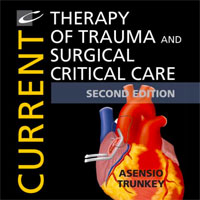
Current Therapy of Trauma and Surgical Critical Care
A comprehensive and contemporary summary of the treatment and post-operative management of traumatic injuries. The concise format makes it ideally suited for everyday use, and new, full-color illustrations highlight the most... read more
Guidelines for the Diagnosis and Management of Critical Illness-Related Corticosteroid Insufficiency – Part II
This part II of the guidelines for the diagnosis and management of critical illness-related corticosteroid insufficiency (CIRCI) in critically ill patients is related to acute illnesses that may be complicated by CIRCI. We... read more
Integration of Nurse Practitioners Into the Critical Care Team
As the demands of critical care medicine increase one viable option to meet needs is the addition of a nurse practitioner to the traditional structure of the critical care team. The purpose of this article is to convey our... read more
Guidelines for the Content of Statistical Analysis Plans in Clinical Trials
While guidance on statistical principles for clinical trials exists, there is an absence of guidance covering the required content of statistical analysis plans (SAPs) to support transparency and reproducibility. Recommendations... read more
Dietitians in Critical Care
Patients in the critical care setting are at risk of malnutrition. The provision of nutrition support (enteral or parenteral) to critically ill patients is vital, but achieving the optimum quantity and balance is a contentious... read more
Four in Five U.S. Physicians Have Been Affected by Cyberattacks
More than four in five U.S. physicians (83 percent) have experienced some form of a cybersecurity attack, according to new research released by Accenture and the American Medical Association (AMA). This, along with additional... read more
Guidelines for the Diagnosis and Management of Critical Illness-Related Corticosteroid Insufficiency – Part I
Evidence-based recommendations for the use of corticosteroids in critically ill patients with sepsis and septic shock, acute respiratory distress syndrome, and major trauma have been developed by a multispecialty task force.... read more
Recommendations for a Standardized Pulmonary Function Report
The American Thoracic Society committee on Proficiency Standards for Pulmonary Function Laboratories has recognized the need for a standardized reporting format for pulmonary function tests. Although prior documents have... read more
Eye Protection in Anaesthesia and Intensive Care
New guidelines on prevention of eye injuries during anaesthesia and intensive care have been developed by the French Society for Anaesthesia and Intensive Care Medicine (SFAR), together with the French Ophthalmology Society... read more
New Guidance for Medication Safety in the ICU
Critically ill patients are a population at high risk for more frequent and more severe medication-related events. Critically ill patients receive twice the number of medications that non-critically ill, hospitalized patients... read more