
Tag: infection
Blood Culture Results Before and After Antimicrobial Administration in Patients With Severe Sepsis
Among patients with severe manifestations of sepsis, initiation of empirical antimicrobial therapy significantly reduces the sensitivity of blood cultures drawn shortly after treatment initiation. Of 3,164 participants... read more
Vitamin D Deficiency in ICU Patients
Vitamin D research has experienced a true hype in all fields of medicine in the last decades. In critical illness, this increased interest has only started 10 years ago. The high prevalence of vitamin D deficiency in... read more
Procalcitonin-Guided Use of Antibiotics for Lower Respiratory Tract Infection
The provision of procalcitonin assay results, along with instructions on their interpretation, to emergency department and hospital-based clinicians did not result in less use of antibiotics than did usual care among patients... read more
Comparison of Diagnostic Accuracy Among Procalcitonin, C-reactive protein, and Interleukin 6 for Blood Culture Positivity in General ICU Patients
Despite various technological advances, it still usually takes at least 24 to 48 h to obtain a blood culture result. The subsequent delays in diagnosis and treatment of infection can negatively impact care in the intensive... read more
How to Optimize the Use of Blood Cultures for the Diagnosis of Bloodstream Infections?
Bloodstream infection (BSI) is a major cause of death in developed countries and the detection of microorganisms is essential in managing patients. Despite major progress has been made to improve identification of microorganisms,... read more
Preventing Surgical Site Infections Related to Abdominal Drains in the ICU
Surgical site infections are significant contributors to health care–associated infections. Nursing interventions may help decrease the incidence of surgical site infections, particularly in regards to the management of... read more
ECMO and Bloodstream Infection in Congenital Diaphragmatic Hernia
The objective of this review is to characterize the risk of bloodstream infection (BSI) and urinary tract infection (UTI) and describe antibiotic use in infants with congenital diaphragmatic hernia (CDH) requiring extracorporeal... read more
The Spleen: The Forgotten Organ in AKI of Critical Illness
Acute kidney injury (AKI) is an increasing medical burden and is independently associated with mortality. AKI is a common comorbidity in the intensive care unit (ICU), with sepsis-associated AKI seen in almost a quarter of... read more
State-Mandated Protocolized Sepsis Care Associated with Decrease in Sepsis Mortality
Beginning in 2013, New York State implemented regulations mandating that hospitals implement evidence-based protocols for sepsis management, as well as report data on clinical outcomes to the state government. This study... read more
Moving Vulnerable Patients Around Hospital Can Increase Infections
Researchers at Overlook Medical Center released a report stating that transporting patients increases the risk of hospital-acquired infections. The study focused on ICU patients being treated for strokes, aneurysm ruptures... read more
Speedy sepsis care slows in-hospital mortality
Sepsis and septic shock patients treated within 3 hours had lower in-hospital mortality rates than those treated between hours 3 and 12, based on data from nearly 50,000 adult patients. The findings were presented at an international... read more
Effective Sepsis Detection with Peripheral Blood Monocyte Distribution
This study evaluated the diagnostic accuracy of peripheral blood monocyte distribution width alone and in combination with white blood cells (WBCs) count for early sepsis detection in the emergency department. An monocyte... read more
Metabolic sepsis resuscitation: the evidence behind Vitamin C
Sepsis resuscitation generally focuses on hemodynamics. Rivers of ink have been spilled writing about oxygen delivery and fluid responsiveness. This is clearly important, but it's possible that our focus on easily... read more
Well: Healing Our Beautiful, Broken World from a Hospital in West Africa
Sarah Thebarge, a Yale-trained physician assistant, nearly died of breast cancer at age twenty-seven, but that did not end her deeply felt spiritual calling to medical missions in Africa. Risking her own health, she moved... read more

A hospital-wide intervention replacing ceftriaxone with cefotaxime to reduce rate of HAI in the ICU
Over the last decades, the incidence of healthcare-associated infections (HAI) caused by extended-spectrum β-lactamase-producing Enterobacteriaceae (ESBL-PE) involved in poor outcomes has dramatically increased worldwide.... read more
Procalcitonin-Guided Antimicrobial Therapy in Critical Care
Procalcitonin guidance for antibiotic cessation improves short-term mortality in ICU patients. Previous meta-analyses showed that procalcitonin-guided antimicrobial management, compared with standard care, resulted in less... read more
Steroids in Septic Shock – Four Misconceptions and One Truth
The utility of steroids in sepsis has been debated passionately for decades. There is hope that steroids might improve mortality, but also fear that they could increase infectious complications. Practice varies widely. What... read more
The association between intravenous fluid resuscitation and mortality in older emergency department patients with suspected infection
Recent studies suggest that hypotension thresholds in current guidelines might be too low for older patients due to arterial stiffening, possibly leading to insufficient fluid resuscitation. We compared intravenous (IV) fluid... read more
Poor Communication Between Physicians and Nurses Linked to Patient Catheter Issues
Communication is contextual, and improving physician-nurse communication about appropriate catheter use may require innovations that address the identified contextual barriers. Several barriers to communication between physicians... read more
Sepsis: Personalization vs. Protocolization?
The history of intensive care has been littered with too many false dawns. Old management dogma, now derided, have been replaced by new and equally resolute convictions, many of which will, in time, undoubtedly follow a similar... read more
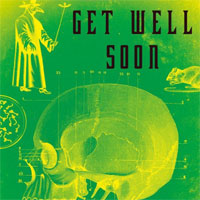
Get Well Soon: History’s Worst Plagues and the Heroes Who Fought Them
A witty, irreverent tour of history's worst plagues―from the Antonine Plague, to leprosy, to polio―and a celebration of the heroes who fought them. In 1518, in a small town in Alsace, Frau Troffea began dancing and... read more
Variation in Identifying Sepsis and Organ Dysfunction Using Administrative Versus Electronic Clinical Data and Impact on Hospital Outcome Comparisons
Variation in the accuracy of claims data for identifying sepsis and organ dysfunction limits their use for comparing hospitals' sepsis rates and outcomes. Using objective clinical data may facilitate more meaningful hospital... read more