
Tag: research
What have been the major recent advances in delirium research and care?
Editor-In-Chief-Elect Giuseppe Citerio discusses the recent article focused on the intensive care delirium research agenda in Intensive Care Medicine (ICM). For this evidence-based paper, a multinational and inter-professional... read more
Barriers and Facilitators to Early Rehabilitation in Mechanically Ventilated Patients
Using a theoretically driven approach, this study identified important barriers and facilitators to early rehabilitation in ICU patients. In particular, the domains of social influences and behavioral regulation were not... read more
How Patient Stories Can Improve Intensive Care
Opportunities to share stories about care, in settings away from the hospital, serve to bridge the gap between the experiences of patients and those of doctors and nurses. The 21st century re-orientation of health care towards... read more
Glycaemic Control Targets After TBI
This meta-analysis of intensive glycaemic control shows no association with reduced mortality in TBI. Intensive glucose control showed a borderline significant reduction in the risk of poor neurological outcome, but markedly... read more
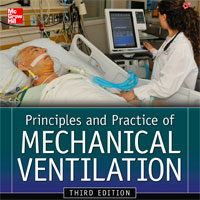
Principles And Practice of Mechanical Ventilation
A comprehensive, authoritative coverage of all the clinical, pharmacological, and technical issues surrounding the use of mechanical ventilation. More than 100 authors, all of whom are at the forefront of research in their... read more
A Cool Way to Save Trauma Patients
Laboratory research like Dr. Alam's has helped to provide answers to some of these questions and demonstrated the feasibility of rapidly inducing hypothermia for exsanguinating trauma. Assuming that the pilot trial and... read more
Model Identifies Seizure Risk in Critically Ill
For critically ill patients, a model comprising six variables can identify the probability of seizure, according to a study published online Oct. 9 in JAMA Neurology. Aaron F. Struck, M.D., from the University of Wisconsin... read more
Business of Critical Care and Value/Performance Building
New, value-based regulations and reimbursement structures are creating historic care management challenges, thinning the margins and threatening the viability of hospitals and health systems. The Society of Critical Care... read more
Perceptions of Risk and Safety in the ICU
This study drew on cognitive research, specifically theories of cognitive dissonance, psychological safety, and situational awareness to explain how professionals' cognitive processes impacted on ICU behaviors. Our results... read more
Value of Social Media in Advancing Surgical Research
Some say surgical research is an oxymoron, maybe because they do not know how much surgeons long for high-quality clinical investigation when they have to make decisions on how to treat their patients. Unfortunately, hard... read more
New Infection Prevention Research Grant Award
The SHEA Education and Research Foundation (SHEAERF), in collaboration with the SHEA Research Committee, is seeking bright and dedicated early investigators within 5 years of completion of training (MPH, PhD, PharmD, or MD)... read more
What is the Role of Benchmarking for Intensive Care?
Although the evaluation of a single intensive care unit (ICU) over time can produce insightful results, self-reflection can lead to excessive optimism or criticism. Benchmarking against other ICUs can provide ICU staff and... read more
A New Awareness of Mental Health in ICU Patients
During the last decade, the field of critical care medicine has been undergoing a sea change, says Dale Needham, medical director of the Johns Hopkins Critical Care Physical Medicine and Rehabilitation Program. It wasn't... read more
Chart Reviews In Emergency Medicine Research: Where Are The Methods?
Medical chart reviews are often used in emergency medicine research. However, the reliability of data abstracted by chart reviews is seldom examined critically. The objective of this investigation was to determine the proportion... read more
Joint Consensus Statement on Postoperative Gastrointestinal Dysfunction Within an Enhanced Recovery
The primary driver of length of stay after bowel surgery, particularly colorectal surgery, is the time to return of gastrointestinal (GI) function. Traditionally, delayed GI recovery was thought to be a routine and unavoidable... read more
Age of Red Cells for Transfusion and Outcomes in Critically Ill Adults
The age of transfused red cells did not affect 90-day mortality among critically ill adults. In an international, multicenter, randomized, double-blind trial, we assigned critically ill adults to receive either the freshest... read more
Probiotics Offer Powerful Protection Against Sepsis in Infants
Sepsis can occur in just about anyone, including infants. Recent research shows feeding newborns probiotics (healthy bacteria) significantly lowers the child's risk of developing sepsis. The study involved infants in rural... read more
Antimicrobials for the Treatment of Drug-Resistant Acinetobacter Baumannii Pneumonia in Critically Ill Patients
This Bayesian network meta-analysis demonstrated the comparative effectiveness of fifteen antimicrobial treatments for drug-resistant A. baumannii pneumonia in critically ill patients. For survival benefit, SUL appears to... read more
Urine Test Developed to Test for Tuberculosis
An international team of researchers has developed a urine test that can be used to detect tuberculosis (TB) in human patients. Alessandra Luchini and her team have developed a urine test for TB that gives results in 12 hours.... read more
Effect of Boarding on Mortality in ICUs
Mortality increased with boarding of critically ill patients. Further research is needed to identify safer practices for managing patients during periods of high ICU occupancy. The study population consisted of 8,429 patients... read more
Clinicians’ Expectations of the Benefits and Harms of Treatments, Screening, and Tests
Clinicians rarely had accurate expectations of benefits or harms, with inaccuracies in both directions. However, clinicians more often underestimated rather than overestimated harms and overestimated rather than underestimated... read more
Fifty Years of Research in ARDS
Mechanical ventilation (MV) is critical in the management of many patients with acute respiratory distress syndrome (ARDS). However, MV can also cause ventilator-induced lung injury (VILI). The selection of an appropriate... read more