
Sodium Bicarbonate In In-Hospital and Out-of-Hospital Cardiac Arrest
Cardiac arrest is a common cause of death worldwide. Sodium bicarbonate (SB) has commonly been used during cardiopulmonary resuscitation (CPR) to correct metabolic acidosis (MA). However, the existence of evidence about its... read more
RSV Infection – Epidemiology and Clinical Risk Factors
Respiratory syncytial virus (RSV) infection is the most frequent reason for hospitalization of infants in developed countries. Premature birth without or, especially, with chronic lung disease of prematurity, congenital heart... read more
Hemodynamic Monitoring Made Easy: Mastering Critical Care Skills for Nurses and Clinicians
This thorough, simple-to-follow book was created especially for critical care nurses, clinicians, and other healthcare workers to help you fully utilize hemodynamic monitoring. With its straightforward, methodical approach... read more
Temporal Trends of RSV-Associated US ICU Admissions
Wide variations in regional and seasonal patterns in hospital and ICU admissions were noted in children with respiratory syncytial virus–associated acute respiratory illness across the United States. Results from our... read more
RSV Outbreak in a Pediatric ICU
The Royal Liverpool Children's Hospital—Alder Hey pediatric intensive care unit (PICU) usually has a low rate of nosocomial respiratory syncytial virus (RSV) infection. We report and analyze a major outbreak of nosocomial... read more
Respiratory Syncytial Virus: Diagnosis and Treatment
Respiratory syncytial virus (RSV) is a respiratory virus which results in symptoms similar to cold. This virus spreads through the drops coming from the nose and throat of an infected person, while sneezing and coughing.... read more
Immunocompromised People May Not Produce Enough Protective Antibodies Against RSV After Vaccination
This study demonstrated heterogeneous antibody response to respiratory syncytial virus (RSV) vaccines among immunocompromised persons. In contrast to universal seroconversion and preF IgG fold rises greater than 10 in immunocompetent... read more
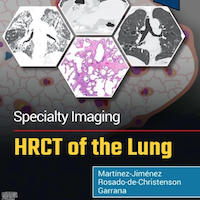
Specialty Imaging: HRCT of the Lung
Part of the highly regarded Specialty Imaging series, HRCT of the Lung, third edition, reflects the many recent changes in HRCT diagnostic interpretation. An easy-to-read bulleted format and thousands of state-of-the-art... read more
Pulmonary Manifestations in Patients With Hematologic Malignancies
Pulmonary involvement is common in patients with hematologic malignancies (HMs) and varies depending on the underlying condition, including lymphoproliferative disorders, acute leukemia, myelodysplastic syndrome, and allogeneic... read more
Impact of Extended-course Oral Nirmatrelvir/Ritonavir in Established Long COVID
Extended courses of nirmatrelvir/ritonavir may have meaningful benefits for some people with Long COVID but not others. We encourage researchers to study how and why nirmatrelvir/ritonavir benefits some and what course length... read more
Health Communication and Adherence to Noninvasive Ventilation in CHRF
This study demonstrated the positive effect of a behavioral strategy based on the IMB model in improving noninvasive ventilation (NIV) adherence in patients with chronic hypercapnic respiratory failure (CHRF). The extended... read more
The ICU Survival Book
The ICU Survival Book is a guide for residents, students, advanced practice providers, and critical care nurses who want to learn the basics of critical care medicine. This reference is designed to follow the systems-based... read more
Clinical Outcomes of Early Phenotype-Desirable Antimicrobial Therapy for Enterobacterales Bacteremia
This is first study to compare clinical outcomes between patients with E coli, K pneumoniae, K oxytoca, and P mirabilis BSIs receiving early PDAT vs delayed PDAT using DOOR analysis. Receiving early phenotype-desirable... read more
Anticoagulation Among COVID-19 Patients
In this prospectively designed meta-analysis of randomized trials, administration of therapeutic- compared with prophylactic-dose anticoagulation with heparins to patients hospitalized for COVID-19 was associated with 23%... read more
IFG vs. CBG in Patients with Multiple Organ Failure Requiring Vasopressor Infusion
Interstitial flash glucose (IFG) does not demonstrate either analytical or clinical accuracy to be considered equivalent to capillary blood glucose (CBG) in patients with multiple organ failure who require vasopressor infusion. This... read more
Prediction of AKI in ICU Patients Based on Interpretable Machine Learning
The machine learning model described in this study is capable of accurately predicting the onset of AKI in ICU patients up to 24 hours in advance. Validated within the MIMIC-IV and MIMIC-III databases, the model demonstrates... read more
Intubate Patients with Sepsis Before Midnight or When the Time Comes?
The ever-recurring decision for every clinician is to act or not to act and when to act. The balance of benefit or harm of an intervention and the optimal timing of treatment is not always clear. Intervening or not and... read more
Does AI Close Gaps in Clinical Pharmacology in the ICU?
Artificial intelligence (AI) has the potential to close significant gaps in clinical pharmacology in the ICU. Its applications range from personalized dosing and predictive analytics to clinical trial optimization and education.... read more
Decision Support Tool in the Prehospital Setting for Acute Chest Pain
Using the Atellica VTLi in the EMS setting for the analysis of troponin I in acute chest pain patients is feasible. However, the instruments are unfamiliar for most EMS personnel, and a break-in period should be allowed for... read more
Textbook of Cardiorenal Medicine
This textbook provides a practical and board-driven resource to describe and define the emerging field of cardiorenal medicine. Covering all aspects of the topic with depth and relevance, this groundbreaking reference brings... read more
Leveraging the Power of Routinely Collected ICU Data
With the steady advent of electronic health records, the abundance of routinely recorded data related to the treatment and care of intensive care unit (ICU) patients can be nothing short of overwhelming. Over tens of... read more
Fluid Bolus Therapy with 20% Albumin vs. Crystalloid-based Regimen
In this trial involving adult patients undergoing cardiac surgery with cardiopulmonary bypass, 20% albumin fluid bolus therapy (FBT) compared to crystalloid FBT did not decrease the occurrence of acute kidney injury (AKI).... read more