Outcomes and inflammation changes in different types of immunocompromised patients with critically ill COVID-19 admitted to ICU
Critically ill COVID-19 patients admitted to the ICU exhibit distinct clinical outcomes based on their immunosuppression status, with cancer patients facing the highest mortality rate due to variations in inflammatory responses... read more
Pulmonary Barotrauma in COVID-19 Patients: Experience From a Tertiary University Hospital
Mechanical ventilation (MV) in COVID-19 patients is often complicated with pulmonary barotrauma. The aim of this study was to determine the incidence and risk factors associated with the development of pulmonary barotrauma... read more
Delirium and Weakness Acquired in the ICU: Individual and Combined Effects on 90-Day Mortality in Survivors of Critical Illness
Mortality is substantially high among critically ill survivors who experience both delirium and weakness, although no additive effect on mortality was observed when these conditions occur together. Our findings highlight... read more
COVID-19 Leaves Lasting Impact on Nursing Practices and Job Satisfaction
The COVID-19 pandemic exacerbated the difficulties nurses experience, especially in emergency departments, requiring adjustments in practice care settings and continuing to impact their overall job satisfaction. Nursing... read more
Tracheostomies The Complete Guide
Tracheostomies: The Complete Guide (2nd ed.) serves as a comprehensive resource for healthcare practitioners and patients navigating the complexities of tracheostomy and laryngectomy care. This edition emphasizes the... read more

A Blueprint for Change in Acute and Critical Care Nursing
A new article from Penn Nursing faculty proposes a significant shift in how nursing care is measured within acute and critical care settings by recognizing the full scope of a nurse's work and its impact on patient outcomes. The... read more
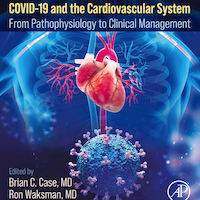
COVID-19 and the Cardiovascular System: From Pathophysiology to Clinical Management
COVID-19 and the Cardiovascular System: From Pathophysiology to Clinical Management comprehensively covers COVID-19's impact on the cardiovascular system. Coverage includes the pathophysiology, clinical manifestations, diagnostic... read more
Microbiological Profile of Hospital Infections in ICUs
Hospital-acquired infections are a serious public health problem, leading to increased morbidity and mortality among patients admitted to intensive care units, complications related to health care, as well as longer hospital... read more
Marino’s The ICU Book: eBook without Multimedia
Dr. Paul L. Marino’s concise, engaging writing style is just one of many reasons that Marino’s The ICU Book is the best-selling reference in critical care. This highly regarded, full-color resource contains the essential... read more
Core Topics in Airway Management
Management of the airway is an important and challenging aspect of many clinicians' work and is a source of complications and litigation. The new edition of this popular book remains a clear, practical and highly-illustrated... read more
Ethics in Intensive Care Medicine (Lessons from the ICU)
In this book, part of the European Society of Intensive Care Medicine (ESICM) textbook series, experts in the field of clinical ethics describe basic principles of clinical ethics and ethical reasoning, the fundamental pillars... read more
Neurocritical Care Board Review: Questions and Answers, Second Edition – Comprehensive Neurocritical Care Review Book with 740 Practice Questions, Includes Digital eBook Access
Updated and expanded, the second edition of Neurocritical Care Board Review contains multiple-choice questions that cover the breadth of topics tested on the neurocritical care boards with answers and rationales for self-study.... read more
Guide to the Most Common Internal Medicine Workups and Diseases: An evidenced based guide for all healthcare providers regarding common hospital based workups and diseases seen in Internal Medicine
This guide was created to simplify, yet cover in detail, the most COMMON workups and diseases seen in the field of Internal Medicine. It is perfect for any 3rd or 4th year medical student, intern or resident, physician assistant,... read more
Thrombocytopenia and COVID-19 pairing in the ICU: Prognostic influence of thrombocytopenia in resuscitated CoViD-19 patients
CoViD-19 is a viral zoonosis caused by the coronavirus strain (SARS-CoV-2), with acute respiratory failure being its most severe manifestation. Our aim was to determine the influence of thrombocytopenia on the severity and... read more
Adjusting risk of AKI for Time on Controlled Mechanical Ventilation in ARDS
The authors expressed concerns that the study did not account for certain key covariates, such as septic shock, right heart failure, or hypoxemia, which are believed to influence the development of AKI. We would like... read more
UFNET Fluid Removal Strategy Secured by Hemodynamic Monitoring vs. Standard of Care in patients with CRRT
An early and active UFNET strategy secured by an advanced hemodynamic protocol using dynamic indices of preload dependence had the capacity to control H72 FB in an ICU population of patients with acute circulatory failure,... read more
Distinct Immune Profiles and Clinical Outcomes in Sepsis Subphenotypes Based on Temperature Trajectories
Sepsis subphenotypes identified using the universally available measurement of body temperature had distinct immune profiles. Hypothermic patients, who had the highest mortality rate, also had the lowest levels of most pro-... read more
Octenidine Bathing Effective in Preventing ICU-acquired Primary Bacteremia
EFFECT has demonstrated that octenidine is effective at preventing primary bacteremia. The emphasis lies among Gram-positive bacteria and common skin commensals. As part of a robust bundle strategy, octenidine can serve... read more
Blood Eosinophils Matter in Post-COVID-19 Pneumonia
Preliminary results showed that a eosinophil increase during hospitalization could be a potential predictor of pulmonary sequelae in surviving patients after COVID-19 pneumonia. Despite the protective role of eosinophils,... read more
A Retrospective Closed Cohort Study on Distribution of Multidrug-Resistant Bacteria in VAP and its Impact on Patient Outcome
Gram-negative organisms, particularly Klebsiella and Acinetobacter, were the main multidrug-resistant (MDR) ventilator-associated pneumonia (VAP) culprits. MDR-VAP exhibited higher morbidity and mortality. A study... read more
Accuracy of Continuous Glucose Monitoring Systems in ICU Patients
In this scoping review of CGM accuracy in the ICU, we found great diversity in accuracy reporting. Accuracy varied depending on CGM and comparator, and may be better for intravascular CGM and potentially lower during hypoglycemia. We... read more
Practical Issues in Anesthesia and Intensive Care
The contents of this book are a selection taken from materials that have been developed during the preparation of continuing education courses (distance learning), whose scientific advisor is the volume editor, Professor... read more