Tag: ARDS
The Hidden Danger of Insufficient Sedation in ARDS
This prospective observational study highlights a critical issue in the Intensive Care Unit (ICU): a substantial number of patients with Acute Respiratory Distress Syndrome (ARDS) receiving continuous neuromuscular blockade... read more
Basics of Mechanical Ventilation
This book is a practical and easily understandable guide for mechanical ventilation. With a focus on the basics, this text begins with a detailed account of the mechanisms of spontaneous breathing as a reference point to... read more
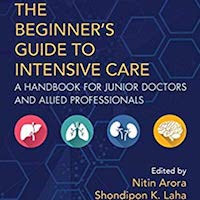
The Beginner’s Guide to Intensive Care: A Handbook for Junior Doctors and Allied Professionals
Ideal for any medic or health professional embarking upon an intensive care rotation or specialism, this simple bedside handbook provides handy, pragmatic guidance to the day-to-day fundamentals of working in an intensive... read more
Predicting Mortality in Sepsis-Related ARDS Using Machine Learning
The application of machine learning methodologies to construct prognostic prediction models for sepsis patients complicated by ARDS, informed by the new global definition, proves to be reliable. This approach can assist clinicians... read more
Heterogenous Treatment Effect of Neuromuscular Blocking Agents for Moderate-to-severe ARDS
The systematic and short-term administration of cisatracurium in patients with moderate-to-severe ARDS appears to confer greater survival benefit in those with a higher baseline life expectancy. Further validation through... read more
Enhancing Early Mortality Prediction for Sepsis-associated ARDS Patients Using Machine Learning
This study utilized the MIMIC-IV, eICU CRD, and NWICU databases to construct and validate a machine learning model, SAFE-Mo, which predicts early mortality in patients with sepsis-associated acute respiratory distress syndrome... read more
Vitamin D Dynamics in Severe ARDS Patients on ECMO
This retrospective study investigated time-dependent changes in vitamin D levels and their correlation with disease severity and inflammation in 24 invasively mechanically ventilated patients with acute respiratory distress... read more
Rib-Indexed POCUS vs. Chest X-Ray for Lung Recruitment Assessment in Ventilated Neonates with Moderate-Severe ARDS on Pulmonary Surfactant Therapy
Rib-indexed posterior approach POCUS is a reliable, radiation-free modality for real-time lung recruitment assessment in neonates with NARDS, demonstrating noninferiority to CXR. Notably, our study is the first to propose... read more
Endotracheal Tube Cuff Pressure Monitoring and VAP Occurrence
This study demonstrated that maintaining endotracheal tube cuff pressure at 30 cm H2O through monitoring every 8 h did not result in a greater incidence of under-inflation (pressures ... read more
Early Acetaminophen Administration Associated with Lower Mortality Among ARDS Patients After Coronary Artery Bypass Grafting
The use of acetaminophen (APAP) at 48h after coronary artery bypass grafting (CABG)-acute respiratory distress syndrome (CABG-ARDS) was associated with lower early postoperative mortality, while shortening the length of hospital... read more
COVID-19 Handbook: Navigating the Future of Healthcare
The COVID-19 Handbook: Navigating the Future of Healthcare provides factual, evidence-based information on the coronavirus disease 2019 (COVID-19) pandemic. Presented in a concise PDF format, this valuable COVID-19 resource... read more
Weaning Failure Prediction Using Electrocardiographic Time-frequency Analysis and Respiration Flow Signals
Weaning patients from mechanical ventilation (MV) is a crucial process that requires meticulous assessment of their ability to breathe independently without ventilatory assistance. Spontaneous breathing test (SBT) is... read more
Management of ARDS COVID-19 Patients Using Hemoperfusion and CRRT
Combined hemoperfusion (HP) and continuous renal replacement therapy (CRRT) hold promise as a potential intervention for severe COVID-19 cases with multiple organ dysfunction, leading to improved clinical outcomes. Fifty-six... read more
Rapid Clinical Effects of Convalescent Plasma Therapy in Severe COVID-19 ARDS
Administration of convalescent plasma (CP) in critically ill COVID-19 patients leads to a rapid and highly significant improvement of sequential organ failure assessment (SOFA) score along with improvements in respiratory... read more
Association Between Ketamine Use and Mortality in Critically Ill Patients Receiving Mechanical Ventilation
In this retrospective study, we observed that younger patients with acute respiratory distress syndrome (ARDS) may benefit from ketamine use in terms of 14-day mortality. However, these benefits were not observed in longer-term... read more
Flow Control Ventilation in ICU
Flow control ventilation is an innovative technique of mechanical ventilation with a potentially lung protective characteristics. The constant inspiratory and expiratory flow, no ventilation pauses, and inspiration to... read more
Cytomegalovirus Infection Adverse Impact on ICU Outcomes in COVID-19 Patients
In critically ill patients with SARS-CoV-2 pneumonia, cytomegalovirus (CMV) infection was frequently observed, and associated with increased ICU and hospital mortality. CMV co-infection correlated with a higher incidence... read more
Nebulized Furosemide Effect on the Mortality of Mechanically Ventilated ARDS Adult Patients
This RCT tackles an important topic in critical care medicine, which involves a large number of critically ill patients and continues to harbor high mortality despite improvements in management. The results of the study... read more
Pirfenidone to Prevent Fibrosis in ARDS
Pulmonary fibrosis is a major complication of the Acute Respiratory Distress Syndrome (ARDS). Pirfenidone is an approved treatment for idiopathic pulmonary fibrosis. It may attenuate ARDS-related fibrosis and decrease the... read more
Lactate Trajectory Models for Predicting AKI and Mortality in Hyperlactatemia Patients
The present study underscores the significant prognostic value of lactate trajectories in critically ill patients, particularly those with hyperlactatemia. Our findings suggest that rapid lactate clearance is strongly... read more
Total Bilirubin as a Marker for Hemolysis and Outcome in ARDS Patients Treated with vvECMO
Patients with acute respiratory distress syndrome (ARDS), treatment with veno-venous ECMO and a total bilirubin (tBili) plasma concentration over the threshold of 3.6 mg/dl had significantly lower chances of survival, recovery... read more
Nebulized Long-Acting Bronchodilators to Treat ARF in an Older Patients
Although long-acting bronchodilators are not approved to treat acute respiratory failure (ARF), the older adult in this case clinically improved after three doses of revefenacin and arformoterol. Additional studies are... read more