Tag: COVID-19
Chloroquine/Hydroxychloroquine for Treating or Preventing COVID-19 Infection
When given along with azithromycin, hydroxychloroquine increased the risk of any unwanted effects, but made no difference to the risk of serious unwanted effects (1 study; 444 people). Compared with lopinavir plus ritonavir,... read more
Efficacy of Serum Angiotensin II Levels in Prognosis of Patients with COVID-19
The serum angiotensin II levels decrease significantly in patients with coronavirus disease 2019, and this decrease is correlated with lung damage. There was no statistical significance between the serum angiotensin II... read more
Antiviral Drugs in Hospitalised COVID-19 Patients
These remdesivir, hydroxychloroquine, lopinavir, and interferon regimens had little or no effect on hospitalized patients with Covid-19, as indicated by overall mortality, initiation of ventilation, and duration of hospital... read more
Functional outcome after inpatient rehabilitation in post-intensive care unit COVID-19 patients
These findings suggest that post-acute COVID-19 patients might beneficiate of a motor and respiratory rehabilitation treatment. However, further studies are advised to better understand long-term sequelae of the disease. Medical... read more
Point-of-Care Ultrasound (POCUS) and COVID-19
COVID-19 is a disease caused by infection with SARS-CoV-2, a virus that affects multiple organ systems with numerous disease manifestations. COVID-19 has a specific tropism for the lower respiratory tract, and the most common... read more
No Significant Difference between Tocilizumab and Placebo in Severe COVID-19 Pneumonia Patients
In this randomized trial involving hospitalized patients with severe COVID-19 pneumonia, the use of tocilizumab did not result in significantly better clinical status or lower mortality than placebo at 28 days. In this... read more
Interleukin-6 Receptor Antagonists in Critically Ill Patients with COVID-19
In critically ill patients with COVID-19 receiving organ support in ICUs, treatment with the interleukin-6 receptor antagonists tocilizumab and sarilumab improved outcomes, including survival. Both tocilizumab and sarilumab... read more
Association of Convalescent Plasma Treatment With Clinical Outcomes in Patients With COVID-19
Treatment with convalescent plasma compared with placebo or standard of care was not significantly associated with a decrease in all-cause mortality or with any benefit for other clinical outcomes. The certainty of the evidence... read more
Learning From Doctors with Long COVID-19
When Sarah Burns and Sue Warren started a support group for doctors with long covid, they found a number of people struggling with new experiences, losses, and vulnerabilities Long covid has emerged as a serious, yet poorly... read more
They served on the COVID-19 front lines. Now these emergency medicine doctors can’t find jobs.
Usually, emergency medicine residents fend off recruiters hoping to hire them. This year, they’re barely getting calls back. Here's how COVID-19 has upended EM job prospects — and what these young doctors worry they may... read more
Helmet CPAP to treat hypoxic pneumonia outside the ICU
Respiratory failure due to COVID-19 pneumonia is associated with high mortality and may overwhelm health care systems, due to the surge of patients requiring advanced respiratory support. Shortage of intensive care unit... read more
Causes and Timing of Death in Critically Ill COVID-19 Patients
Mortality rate of critically ill COVID-19 patients is high, especially in those requiring invasive mechanical ventilation. However, the causes and the timing of death of patients admitted to the ICU for SARS-CoV-2 pneumonia... read more
Analysis of Fentanyl Pharmacokinetics and Tolerance in Critically-Ill Children
Different weight-based fentanyl dosing rates may be required for infants and children of different ages to achieve similar plasma concentrations. Using SBS scores may guide the dosing titration of fentanyl that resulted in... read more
SOFA Score Accuracy For Determining Mortality Of Severely Ill Patients With COVID-19 Pneumonia
The SOFA score possesses inadequate discriminant accuracy to be used for ventilator triage of COVID-19 patients. A better option is needed that incorporates variables specifically related to mortality in patients with COVID-19... read more
Testing Asymptomatic Patients for COVID-19 – Known Unknowns
How common is asymptomatic COVID-19? How infectious is it? And how much does it actually contribute to overall transmission? Nicola Low spoke on behalf of herself and Muge Cevik to outline the role of asymptomatic transmission.... read more
Epidemiology and microbiology of ventilator-associated pneumonia in COVID-19 patients
The COVID-19 pandemic is responsible for many hospitalizations in intensive care units (ICU), with widespread use of invasive mechanical ventilation (IMV) which exposes patients to the risk of ventilator-associated pneumonia... read more
Central and peripheral nervous system complications of COVID-19
CNS and PNS complications were common in hospitalized COVID-19 patients, particularly in the ICU, and often attributable to critical illness. When COVID-19 was the primary cause for neurological disease, no signs of viral... read more
Duty of Care: One NHS Doctor’s Story of Courage and Compassion on the COVID-19 Frontline
The first book to tell the full story of the Covid-19 pandemic, from an NHS doctor working inside hospitals to save lives and combat the virus on the front line. Duty of Care is the first book to tell the full story of... read more
Effect of a Single High Dose of Vitamin D3 on Hospital LOS in Patients with COVID-19
Among hospitalized patients with COVID-19, a single high dose of vitamin D3, compared with placebo, did not significantly reduce hospital length of stay. The findings do not support the use of a high dose of vitamin D3 for... read more
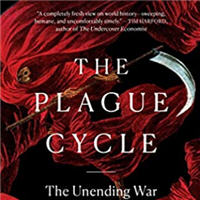
The Plague Cycle: The Unending War Between Humanity and Infectious Disease
For four thousand years, the size and vitality of cities, economies, and empires were heavily determined by infection. Striking humanity in waves, the cycle of plagues set the tempo of civilizational growth and decline, since... read more
Early Intervention for the Treatment of Acute Laryngeal Injury After Intubation
This study suggests that early intervention for patients with postintubation laryngeal injury was associated with a decreased duration of tracheostomy dependence, a higher rate of decannulation, and fewer surgical procedures... read more
The Rules of Contagion: Why Things Spread – And Why They Stop
From ideas and infections to financial crises and fake news, an "utterly timely" look at why the science of outbreaks is the science of modern life These days, whenever anything spreads, whether it's a YouTube fad or a... read more