
Tag: ICU
Disinfection Devices in ICU Sinks Dramatically Reduce Superbugs
Putting disinfection devices onto the siphons of sinks can help manage multidrug-resistant Pseudomonas aeruginosa colonization in intensive care units, according to a study published in Journal of Hospital Infection. Researchers... read more
AKI and Subsequent Frailty Status in Survivors of Critical Illness
Acute kidney injury in survivors of critical illness predicted worse frailty status 3 and 12 months postdischarge. These findings have important implications on clinical decision making among acute kidney injury survivors... read more
Safety of Patient Mobilization and Rehabilitation in the ICU
Patient mobilization and physical rehabilitation in the ICU appears safe, with a low incidence of potential safety events, and only rare events having any consequences for patient management. Heterogeneity in the definition... read more
One Nation Under Stress
In an eye-opening new film, Dr Sanjay Gupta explores the link between stress and the continuing fall in US life expectancy. In the documentary, which premiered on HBO, Gupta speaks with scientists, affected individuals and... read more
Prognostic Accuracy of the Serum Lactate Level, the SOFA Score and the qSOFA Score for Mortality Among Adults with Sepsis
Sepsis is a common critical condition caused by the body’s overwhelming response to certain infective agents. Many biomarkers, including the serum lactate level, have been used for sepsis diagnosis and guiding treatment.... read more
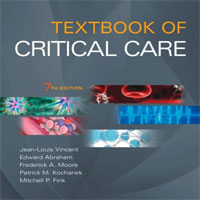
Textbook of Critical Care
Comprehensive, concise, and readable, Textbook of Critical Care, 7th Edition, brings you fully up to date with the effective management of critically ill patients, providing the evidence-based guidance you need to overcome... read more
Outcomes of Critically Ill Patients Who Received Cardiopulmonary Resuscitation
Although overall survival of ICU patients was 15.9%, patients requiring pressors and who experienced a CPA in an ICU were half as likely to survive to discharge and to be discharged home than patients not taking pressors.... read more
Moving On as an ICU Family After the Death of a Respected Leader
Paul Young is an intensive care specialist at Wellington Hospital in New Zealand where he is the co-clinical leader at Wellington ICU. He is also medical director of Wakefield Hospital ICU, Deputy Director at the Medical... read more
ICU Physiology in 1000 Words: The Mean Systemic Filling Pressure
Consider sitting deep within the hull of this cruise ship, ignorant to the outside. A leak is sprung and ocean begins to rush in. Thinking quickly you activate the bilge pump which, appropriately, ejects the ocean outside... read more
The Association Between Visiting Intensivists and ICU Outcomes
During a period of service reconfiguration, intensivists routinely rostered to work in one ICU worked in another of the hospital's four ICUs. "Home" intensivists were those who continued to work in their usual... read more
Optimizing Ceftolozane-tazobactam Dosage in Critically Ill Patients During Continuous Venovenous Hemodiafiltration
Ceftolozane-tazobactam (C/T), the combination of a new cephalosporin with a classic β-lactamase inhibitor, is currently considered the most active betalactam antibiotic against P. aeruginosa. Despite several case reports... read more
In-Hospital Cardiac Arrest
In-hospital cardiac arrest is common and associated with a high mortality rate. Despite this, in-hospital cardiac arrest has received little attention compared with other high-risk cardiovascular conditions, such as stroke,... read more
The Effects of Family Functioning on the Development of Posttraumatic Stress in Children and Their Parents Following Admission to the PICU
Both children and parents have alarmingly high rates of acute stress and posttraumatic stress following the child's PICU admission. Although family function did not emerge as a predictor in this study, further understanding... read more
Optimizing Continuous RRT in the ICU
The consideration of acute kidney injury, its incidence and its impact on the outcome of patients has grown continuously in recent years, leading to an increase in the use of renal replacement therapy (RRT) techniques. Recent... read more
Does De-escalation of Anti-MRSA Therapy for Culture-negative Pneumonia Affect Patient Outcomes?
Nosocomial pneumonia is a common hospital-acquired infection and has a high mortality rate in the critically ill. Because drug-resistant bacteria like Pseudomonas aeruginosa and methicillin-resistant Staphylococcus aureus... read more
The Effect of Diaries Written by Relatives for ICU Patients on PTSD
The results of this study will inform ICU nurses about the effects, strengths and limitations of prompting relatives to author a diary for the patient. This will allow the diary intervention to be tailored to the individual... read more
A Randomized Trial of Glutamine and Antioxidants in Critically Ill Patients
Critically ill patients have considerable oxidative stress. Glutamine and antioxidant supplementation may offer therapeutic benefit, although current data are conflicting. In this blinded 2-by-2 factorial trial, we randomly... read more
Optimizing Beta-Lactam Treatment in the ICU
The French Society of Pharmacology and Therapeutics (SFPT) and the French Society of Anesthesia and Intensive Care Medicine (SFAR) have released guidelines on the optimization of beta-lactam treatment in intensive care unit... read more
Low Hand Hygiene Compliance in ICUs
Healthcare workers in intensive care units (ICUs) are regularly missing opportunities to clean their hands during the care of patients, despite its critical importance for infection control, according to new research being... read more
Going Into Hospital Far Riskier Than Flying
Millions of people die each year from medical errors and infections linked to health care and going into hospital is far riskier than flying according to World Health Organization. If you were admitted to hospital tomorrow... read more
To transfuse or not transfuse: an intensive appraisal of red blood cell transfusions in the ICU
A restrictive transfusion threshold is recommended in nearly all critically ill patients. This is at least noninferior to more liberal transfusion practice; in addition, a restrictive threshold has shown improved outcomes... read more
Research Ethics and Informed Consent in Critical Care
Research studies in critically ill populations pose many unique regulatory and ethical challenges that have implications for study design and execution. The life-threatening nature of conditions being studied and the urgency... read more