
Tag: ICU
Tigecycline in Critically Ill Patients on Continuous RRT
Despite high dialysability, dialysis clearance displayed only a minor contribution to tigecycline elimination, being in the range of renal elimination in patients without AKI. No dose adjustment of tigecycline seems necessary... read more
Antimicrobial Exposure and the Risk of Delirium in Critically Ill Patients
First-, second-, and third-generation cephalosporins doubled the odds of delirium after baseline co-morbidities, ICU type, the course of critical care, and other competing antimicrobial and psychotropic medication risks were... read more
Crystalloids vs. Colloids for Fluid Resuscitation in the ICU
This systematic review and meta-analysis, which included only high-level evidence from randomized, controlled trials (RCTs) conducted in intensive care settings, revealed that crystalloids were less effective than colloids... read more
Risk Factors for 1-Year Mortality and Hospital Utilization Patterns in Critical Care Survivors
One in five ICU survivors die within 1 year, with advanced age and comorbidity being significant predictors of outcome, leading to high resource use. Care process factors indicating high system stress were associated with... read more
Caring for Critically Ill Patients with the ABCDEF Bundle
ABCDEF bundle performance showed significant and clinically meaningful improvements in outcomes including survival, mechanical ventilation use, coma, delirium, restraint-free care, ICU readmissions, and post-ICU discharge... read more
Long-term outcomes in patients with septic shock transfused at a lower versus a higher haemoglobin threshold
Long-term mortality rates and HRQoL did not differ in patients with septic shock and anaemia who were transfused at a haemoglobin threshold of 7 g/dl versus a threshold of 9 g/dl. We may reject a more than 3 % increased hazard... read more
Remodeling ICU Care
A new study finding that two antipsychotics were no more effective than placebo for delirium in critical illness spurs discussion about alternative methods for managing that care. Neither haloperidol nor ziprasidone — both... read more
Decontaminants Don’t Cut Bloodstream Infection Risk in Ventilated ICU Patients
The use of digestive and oral decontaminants in patients in the intensive care unit (ICU) who are mechanically ventilated and who have moderate to high antibiotic resistance is not associated with a reduction in ICU-acquired... read more
Burnout How Can We Improve
The risk of burnout in intensive care is high, there is a great need to look after ourselves and each other to enable us to effectively care for our patients and to be part of not only an effective team but also an enjoyable... read more
Vitamin Treatment For Sepsis Is Put To The Test
Dr. Jonathan Sevransky was intrigued when he heard that a well-known physician in Virginia had reported remarkable results from a simple treatment for sepsis. Could the leading cause of death in hospitals really be treated... read more
Early Resumption of β Blockers Is Associated with Decreased Atrial Fibrillation after Noncardiothoracic and Nonvascular Surgery
Resuming β blockers in chronic users by the end of the first postoperative day may be associated with lower odds of in-hospital atrial fibrillation. However, there seems to be little advantage to restarting on the day of... read more
Cast of the Right Bronchial Tree
A 36-year-old man was admitted to the intensive care unit with an acute exacerbation of chronic heart failure. His medical history included heart failure with an ejection fraction of 20%, bioprosthetic aortic-valve replacement... read more
Epidemiology of Mechanically Ventilated Patients Treated in ICU and non-ICU Settings in Japan
A large proportion of Japanese patients on mechanical ventilation (MV) were treated in non-ICU settings. Analysis of administrative data indicated preliminary that hospital mortality rates in these patients were higher in... read more
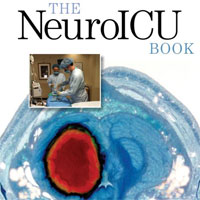
The NeuroICU Book
An immediate classic, this groundbreaking text is based on the premise that neurointensivists must be trained to handle not only the brain, but the entire body. The NeuroICU Book, Second Edition does not limit coverage to... read more
Would A Change in Nomenclature for ICUs Promote Less Aggressive Care?
The term "intensive care unit" (ICU) was originally meant to refer to the intensity of the resources allocated to patient care. Today, however, ICU refers more to the intensity of the interventions undergone by the patient.... read more
Reprint of Recovery Programme for ICU Survivors Has No Effect on Relatives’ Quality of Life
The recovery programme intended for intensive care survivors did not have an effect on the relatives. Future recovery programmes should be targeted to help both patient and family, and future research should be conducted... read more
A Multicentre Randomised Controlled Trial of Levetiracetam vs. Phenytoin for Convulsive Status Epilepticus in Children
Convulsive status epilepticus (CSE) is the most common life-threatening childhood neurological emergency. Despite this, there is a lack of high quality evidence supporting medication use after first line benzodiazepines,... read more
Anesthesia Telemedicine: Assessing Hard-to-Reach Patients for Surgery
Medically fragile infants on ventilation support at community or rural hospitals without surgical services sometimes need those services. That poses a challenge for pediatric anesthesiologists who need to assess these babies... read more
Rapid Bedside Evaluation of Seizures in the ICU by Listening to the Sound of Brainwaves
The Ceribell EEG System enabled rapid acquisition of electroencephalography (EEG) in patients at risk for non-convulsive seizures and aided clinicians in their evaluation of encephalopathic ICU patients. The ease of use and... read more
Do State Regulations on Nurse Staffing Make a Difference in ICU Outcomes?
In the recent issue of Critical Care Medicine, Law and colleagues published an evaluation of the impact of changes in Massachusetts state regulations mandating that nurse staffing levels on critical care units be set at 1:1... read more
Dear NRA, I’m a doctor. My lane? I sit in this chair when I tell parents their kids are dead
Seems like a little thing, but I did this in response to a tweet by the National Rifle Association, asserting that doctors should "stay in our lane" instead of studying or making recommendations when it comes to gun violence.... read more
Burnout in Intensive Care: How Can We Improve?
The risk of burnout in intensive care is high, there is a great need to look after ourselves and each other to enable us to effectively care for our patients and to be part of not only an effective team but also an enjoyable... read more