Tag: research
Legacy Emanuel Medical Center Plants With Purpose
The benefits of access to nature have been shown in a variety of settings and contexts, notes Roger S. Ulrich, an international leader in evidence-based healthcare design and a consultant to Legacy Health’s therapeutic... read more
Doctors Rely on More than Just Data for Medical Decision Making
Many technology companies are working on artificial intelligence systems that can analyze medical data to help diagnose or treat health problems. Such systems raise the question of whether this kind of technology can perform... read more
Over Half Of Patients And Families Hesitate To Raise ICU Safety Concerns
Imagine you're in the intensive care unit at the bedside of your loved one, and you think you see a medical mistake — a wrong pill, an unwashed hand. Do you speak up? Even if you're afraid that might annoy or alienate the... read more
ICU ventilators overused among advanced-dementia patients
Mechanical ventilation may be lifesaving, but in certain patient cases it may prolong suffering without a clear benefit. JAMA Internal Medicine published a study of 635,008 hospitalizations of nursing-home patients with advanced... read more
Operation Timing and 30-Day Mortality After Elective General Surgery
Elective general surgery appears to be comparably safe at any time of the workday, any day of the workweek, and in any month of the year. The binary outcomes of 32,001 elective general surgical patients at the Cleveland Clinic... read more
Foleys Aren’t Fun: Patient Study Shows Catheter Risks
A new study puts large-scale evidence behind what many hospital patients already know: Having a urinary catheter may help empty the bladder, but it can hurt, lead to urinary tract infections, or cause other issues in the... read more
The Intensive Care Medicine Research Agenda in Nutrition and Metabolism
Priorities for clinical research in the field of nutritional management of critically ill patients were suggested, with the prospect that different nutritional interventions targeted to the appropriate patient population... read more
Evaluation of a strategy for enrolling the families of critically ill patients in research using limited human resources
Family members were recruited for more than one third of eligible patients, and >90% of approached consented to participate. There are important demographic differences between patients with vs without an enrolled family... read more
Bacterial protein structure could aid development of new antibiotics
Bacterial cells have an added layer of protection, called the cell wall, that animal cells don't. Assembling this tough armor entails multiple steps, some of which are targeted by antibiotics like penicillin and vancomycin.... read more
New research shows why nutrition should be back on the table for surgical patients
More than 48 million people in the U.S. undergo surgery each year, and for decades the focus has been on making sure patients do not consume any food or drinks in the hours leading up to the surgery. Yet, 1 in 3 patients... read more
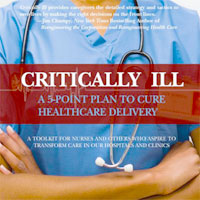
Critically Ill: A 5-Point Plan to Cure Healthcare Delivery
Two decades ago Dr. Fred Southwick witnessed the near demise of his wife while she was being cared for in a prominent academic medical center. For 15 years he blamed the individual physicians who cared for Mary. However five... read more
The Efficacy of ECMO for Severe ARDS
The H1N1 epidemic demonstrated that extracorporeal membrane oxygenation (ECMO) use in the most critically ill patients with acute respiratory distress syndrome (ARDS) resulted in a substantial decrease in mortality. The CESAR... read more
At the Root: Defining and Halting Progression of Early COPD
Chronic obstructive pulmonary disease (COPD) is a heterogeneous disorder with varying presentations and progression, but limited disease-modifying therapies. Trajectories of lung function decline in COPD differ significantly... read more
The Practice of Respect in the ICU
Although "respect" and "dignity" are intuitive concepts, little formal work has addressed their systematic application in the ICU setting. After convening a multidisciplinary group of relevant experts, we undertook a review... read more
Intravenous Iron, Not Oral, Improves Functional Capacity in HF Patients
The oral iron supplement failed to be absorbed, while the successful IV formulation is not without significant logistical and cost issues. In one study testing a convenient and easy-to-use oral iron supplement, investigators... read more
Clinical Trial Participants’ Views of the Risks and Benefits of Data Sharing
In a survey of participants in clinical trials, most believe the potential benefits of data sharing outweigh potential negative consequences and are willing to share their data. Less than 8% of respondents felt that the potential... read more
Automated System Detects Risk of VAP
Approximately 50 percent of all patients receiving mechanical ventilator support develop ventilator-associated pneumonia (VAP). Researchers at Massachusetts General Hospital (MGH) have developed an automated system for identifying... read more
Association of the Quick Sequential (Sepsis-Related) Organ Failure Assessment (qSOFA) Score With Excess Hospital Mortality in Adults With Suspected Infection in Low- and Middle-Income Countries
In this retrospective secondary analysis of 9 diverse LMIC cohorts that included 6569 hospitalized adults with suspected infection, a qSOFA score greater than or equal to 2 was significantly associated with increased likelihood... read more
Ten Shortcomings of the Current Definition of AKI
Acute kidney injury (AKI) is defined as an abrupt decline in kidney function. Although the kidney has many functions, this "abrupt decline" mostly refers to the glomerular filtration rate (GFR) that cannot... read more
Sepsis patients treated and released from emergency departments do well with outpatient follow-up
National guidelines assume that all patients who're diagnosed with clinical sepsis in an emergency department will be admitted to the hospital for additional care, but new research has found that many more patients are being... read more
The use of echocardiographic indices in defining and assessing right ventricular systolic function in critical care research
TAPSE seemed to be the most popular index in the last 2–3 years. Many studies used combinations of indices but, apart from cor pulmonale, we could not find a consistent pattern of RV assessment and definition of RV dysfunction... read more
Effect of Use of a Bougie vs Endotracheal Tube and Stylet on First-Attempt Intubation Success Among Patients With Difficult Airways Undergoing Emergency Intubation
In this emergency department, use of a bougie compared with an endotracheal tube + stylet resulted in significantly higher first-attempt intubation success among patients undergoing emergency endotracheal intubation.... read more