
Bedside PUG Tube Placement by Critical Care Physicians
Critically ill patients often require gastrostomy tubes. Percutaneous endoscopic gastrostomy has become the most common method of placement but is not widely performed by critical care physicians, in part due to their lack... read more
The Application of 6S and PDCA Management Strategies in the Nursing of COVID-19 Patients
Overall, the management of the nursing team followed the PDCA (Plan-Do-Check-Act) cycle management principle as described in a previous study, thus enabling real-time planning, execution, inspection and improvement. During... read more
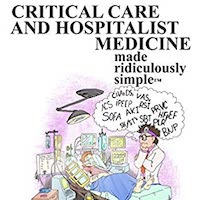
Critical Care and Hospitalist Medicine Made Ridiculously Simple
A fundamental and thorough guide to the treatment of hospitalized patients in critical care situations, "Critical Care and Hospitalist Medicine Made Ridiculously Simple" provides both introductory information as well as a... read more
POCUS is Having Its Moment
Ultrasound performed at the point of care (POCUS) is having its moment. The COVID-19 pandemic has seemingly caused the acceleration of POCUS acceptance by hospital leaders, and POCUS examinations are increasingly performed... read more
Factors Associated With Death in Critically Ill Patients With COVID-19 in the US
This study identified demographic, clinical, and hospital-level risk factors that may be associated with death in critically ill patients with COVID-19 and can facilitate the identification of medications and supportive therapies... read more
Infectious Meningitis and Encephalitis in ICU
Infectious meningitis and encephalitis are a major concern in ICU since they are associated with high mortality and permanent neurological injury. About 3% of central nervous system infections will be admitted in the ICU. Three... read more
Moderna mRNA Vaccine Candidate’s Phase I Trial
Eight weeks to the day after press-releasing some top line results, the full paper is out on the Moderna mRNA vaccine candidate’s Phase I trial. I'm very glad to see it – it's going to be very important for the full data... read more
Early Prediction of ICU-Acquired Weakness
The previously developed prediction model for ICU-AW showed poor performance in a new independent multicenter validation cohort. Model updating methods improved calibration but not discrimination. The newly derived prediction... read more
Managing COVID-19 in Hospital Settings
A series of papers to be published across a variety of journals provides a potential roadmap for treating COVID-19 patients within a hospital setting. It tells practitioners in these healthcare environments how to prepare... read more
Research Shows Increased Thrombus Burden in COVID-19 Patients With STEMI
There may be a strong signal towards higher thrombus burden and poorer outcomes in COVID-19 patients presenting with STEMI, supporting the need for establishing COVID-19 status in all STEMI cases, according to a study published... read more
Heparin 2.0: A New Approach to the Infection Crisis
In April 2020, the US Food and Drug Administration granted emergency use authorization for certain medical devices to be used in patients with coronavirus disease 2019 (COVID-19). This included extracorporeal blood purification... read more
Approach to New Fever or Rigors in the ICU Patient
Failure to recognize neutropenic fever as a separate entity that requires immediate treatment. Routinely ordering urinalysis and sputum cultures (for most patients, this will only lead to false-positive results and unnecessary... read more
Elective Tracheostomy During COVID-19: To Whom, When, How?
We suggest to wait at least 14 days to perform tracheostomy. In patients with SOFA score > 6 and D dimer > 4, tracheostomy should not be performed or should be postponed. Optimized procedures and enhanced personal... read more
Haloperidol for Treatment of Headache in the ED
Headache is a common chief complaint that emergency physicians encounter almost every day and sometimes multiple times in each shift. In fact, headache is the fifth leading cause of patients presenting to the emergency department... read more
What We Should Learn From the First Wave of COVID-19
The pace at which the healthcare system has evolved in 2020 has been staggering. What system improvements we sustainably hold on to may be the most important factor in determining our community's future success. We may... read more
Manual of ICU Procedures
Manual of ICU Procedures is a comprehensive, step-by-step guide to intensive care procedures. The book is divided into four anatomical sections, and a final miscellaneous section. Section one covers airway and respiratory,... read more
COVID-19: How to Quantify and Interpret Treatment Effects in Comparative Clinical Studies
Clinical trials of treatments for coronavirus disease 2019 (COVID-19) draw intense public attention. More than ever, valid, transparent, and intuitive summaries of the treatment effects, including efficacy and harm, are needed.... read more
Communication Strategy for Families of Patients Dying in the ICU
Providing relatives of patients who are dying in the ICU with a brochure on bereavement and using a proactive communication strategy that includes longer conferences and more time for family members to talk may lessen the... read more
COVID-19: Airborne Particle Contamination Increased Substantially Using the Aerosol Box
Study shows that aerosol box used to protect healthcare workers during COVID intubation increases, rather than decreases, exposure to airborne particles. A new study shows that aerosol boxes that have been manufactured... read more
Incidence of Pulmonary Embolism in Non-critically ill COVID-19 Patients
Recent studies suggest that thrombotic complications are a common phenomenon in the novel SARS-CoV-2 infection. The main objective of our study is to assess cumulative incidence of pulmonary embolism (PE) in non critically... read more
Avoiding Common ICU Errors
This pocket book succinctly describes 318 errors commonly made by attendings, residents, interns, nurses, and nurse-anesthetists in the intensive care unit, and gives practical, easy-to-remember tips for avoiding these errors.... read more

Harm of IV High-Dose Vitamin C Therapy in Adult Patients
There is no consistent evidence that IV high-dose vitamin C therapy is more harmful than placebo in double-blind randomized controlled trials. However, reports of oxalate nephropathy, hypernatremia, glucometer error, and... read more