Vitamin C: Should We Supplement?
A short course of intravenous vitamin C in pharmacological dose seems a promising, well tolerated, and cheap adjuvant therapy to modulate the overwhelming oxidative stress in severe sepsis, trauma, and reperfusion after ischemia.... read more
Cricoid Pressure in Airway Management: The IRIS Trial
This large randomized clinical trial performed in patients undergoing anesthesia with RSI failed to demonstrate the non-inferiority of the sham procedure in preventing pulmonary aspiration. Further studies are required in... read more
The Benefit of Lung-Protective Ventilation in the ED
Intubation and mechanical ventilation are commonly performed ED interventions and although patients optimally go to an ICU level of care afterwards, many of them remain in the ED for prolonged periods of time. It is widely... read more
Reducing Hospital-Acquired Infections Among the Neurologically Critically Ill
Hospital-acquired infections (HAIs) result in excess morbidity, mortality, and resource consumption. Immobilized, ventilator-dependent ICU patients are at the highest risk of HAI. Despite broad implementation of relevant... read more
ICU Costs Higher for Patients Dying Before Discharge
The high cost of critical care has engendered research into identifying influential factors. However, previous studies have not considered patient vital status at ICU discharge. This is what a new study has found: The largest... read more
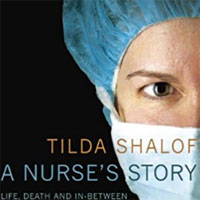
A Nurse’s Story
The team of nurses that Tilda Shalof found herself working with in the intensive care unit (ICU) of a big-city hospital was known as "Laura's Line." They were a bit wild: smart, funny, disrespectful of authority, but also... read more
High-flow Nasal Cannula Oxygen Therapy for AHRF in Patients with CLD
A high-flow nasal cannula (HFNC) is a high-flow oxygen supply device developed in recent years and is increasingly being used to treat acute hypoxemic respiratory failure (AHRF) in intensive care unit (ICU). Patients with... read more
Thromboelastography-based Anticoagulation Management During ECMO
Thromboelastography (TEG) seems to be safely used to guide anticoagulation management during ECMO. Its use was associated with the administration of lower heparin doses compared to a standard of care aPTT-based protocol.... read more
Immediate interruption of sedation compared with usual sedation care in critically ill postoperative patients
This trial provides evidence that a strategy of avoiding continuous sedation as early as possible, in the absence of residual neuromuscular blockade and hypothermia, compared with usual sedation care, resulted in improvements... read more
Surfactant protein D is a causal risk factor for COPD
Surfactant protein D (SP-D) is produced primarily in the lung and is involved in regulating pulmonary surfactants, lipid homeostasis and innate immunity. Circulating SP-D levels in blood are associated with chronic obstructive... read more
Interventions to Improve the Physical Function of ICU Survivors
ICU admissions are ever increasing across the United States. Following critical illness, physical functioning (PF) may be impaired for up to 5 years. We performed a systematic review of randomized controlled trials evaluating... read more
The Shocked Intubation: Definitive Airway Sans Hypotension
Not many aspects of Emergency Medicine define our specialty better than resuscitation, and few concepts exemplify resuscitation better than shock and intubation. Yet few words together strike greater fear in the minds of... read more
Taming the Ketamine Tiger
THOSE who anesthetize patients with ketamine (originally given the clinical investigation number CI-581) realize it is a unique pharmacological agent. Ever since its introduction into human clinical anesthesia, ketamine has... read more
The utility of biomarkers in traumatic brain injury clinical management
Currently, TBI management is guided by clinical histories and neuroimaging techniques. While these techniques may be advanced, they are more costly than serum analysis, involve exposure to ionizing radiations, and have certain... read more
Predicting the Haemodynamic Response to Prone Positioning
A Novel and Simultaneous Analysis of the Guyton and Rahn Diagrams. Graphical models of physiology are heuristically appealing as they facilitate qualitative conclusions at the bedside of the critically ill. Historically,... read more
Top 10 Tips for New Interns to Survive and Thrive the ICU Rotation
Graduating residents moving on and new interns, fresh out of medical school with their clean and crisp long white coats, moving in. Out with the old, in with the new! The ICU rotation for medicine residents and medical students... read more
Terlipressin vs. Norepinephrine As Infusion in Patients With Septic Shock
In this multicentre, randomised, double‑blinded trial, we observed no difference in mortality between terlipressin and NE infusion in patients with septic shock. Patients in the terlipressin group had a higher number of... read more
Avoiding Common Errors in the Emergency Department
In a conversational, easy-to-read style, Avoiding Common Errors in the Emergency Department, 2nd Edition, discusses 365 errors commonly made in the practice of emergency medicine and gives practical, easy-to-remember tips... read more
What’s the Bleeding Problem with Trauma Laparotomies?!
Mortality for hypotensive trauma patients undergoing emergency laparotomy have not changed in 20 years. This blog explores the literature and the future! Wait! We're emergency physicians, why do we care about laparotomies?!... read more
Short People Have Higher Risk Of Dying In The ICU
Researchers of a new study have found a link between a patient's height and odds of survival in the intensive care unit (ICU) of the hospital. The study, published in the journal Intensive Care Medicine on Dec. 23, show that... read more
Patient-tailored Triage Decisions by Anesthesiologist-staffed Prehospital Critical Care Teams
The primary objective was to estimate the incidence of patients in the Central Denmark Region triaged to bypass the local emergency department without being part of a predefined fast-track protocol. The secondary objective... read more
Principles of Fluid Management and Stewardship in Septic Shock
There are only four major indications for fluid administration in the critically ill: resuscitation, maintenance, replacement and nutrition (enteral or parenteral). In this review, a conceptual framework is presented looking... read more