
Safety of RSI in an Emergency Training Network
Implementation of an evidence-based care bundle and audit of practice has created a safe environment for trainees to learn the core critical care skill of Rapid sequence intubation (RSI). In our setting, checklist use was... read more
An Index Combining Respiratory Rate and Oxygenation to Predict Outcome of Nasal High-Flow Therapy
In patients with pneumonia with acute respiratory failure treated with high-flow nasal cannula (HFNC), ROX is an index that can help identify those patients with low and those with high risk for intubation. This was a... read more
Resident competencies before and after short ICU rotations
A monthly multi-competency assessment for specialty residents rotating in the ICU is likely feasible for most programs with appropriate resources, and generally acceptable for residents. Specialty residents' cognitive reasoning... read more
COVID-19 and VILI: Mechanical Power Measurement
The COVID-19 pandemic has increased the need for a bedside tool for lung mechanics assessment and ventilator-induced lung injury (VILI) monitoring. Mechanical power is a unifying concept including all the components which... read more
COVID-19 Awake Proning – All Hype?
In this prospective meta-analysis of observational studies of patients with acute hypoxemic respiratory failure due to COVID-19, APP did not result in lower intubation or mortality rates, despite reported improvements in... read more
Mediastinal lymphadenopathy may predict 30-day mortality in COVID-19 patients
Along with older age and consolidation pattern,enlarged mediastinal lymphadenopathy was found to be an independent predictor of 30-day mortality in patients with COVID-19. Although enlarged mediastinal lymphadenopathy... read more
Rapid detection of clinically-relevant plasma direct oral anticoagulant levels following acute traumatic injury
In urgent clinical situations, such as trauma, urgent surgery or before thrombolysis, rapid quantification of direct oral anticoagulant plasma drug levels is warranted. Using the ClotPro® analyser, we assessed two novel... read more
Prediction Model for Severe CAP among Patients with Diabetes Mellitus
Diabetes is an independent risk factor for the development of severe community-acquired pneumonia (CAP) and associated with pneumonia-related hospitalization as well as mortality. Here, we assessed several selected biomarkers... read more
COVID-19: Clinical manifestations of blood cell parameters and inflammatory factors
CRP and Lymphocyte count (LYM#) showed strong correlation with disease progression, suggesting that these parameters could be used to monitor changes in patient condition. 92 patients with confirmed COVID-19 at Jingzhou... read more
Pharyngeal abscess: a rare complication of repeated nasopharyngeal swabs
A 73-year-old end-stage renal disease patient who had undergone craniopharyngioma resection 30 years previously was admitted to hospital after a fall. He developed hospital-acquired laboratory-confirmed SARS-CoV-2 that required... read more
Current airway management practices after a failed intubation attempt
The majority of second intubation attempts were undertaken by emergency consultants and registrars. A change from a non-consultant intubator to a consultant intubator of any specialty for the second attempt and intubation... read more
How can artificial intelligence transform pneumonia diagnosis?
Hot on the heels of FDA approval for its AI-guided cardiac ultrasound software, Caption has received a $4.95m grant from the Gates Foundation to create a version that could speed up pneumonia diagnosis, the leading killer... read more
Covid PPE: How healthcare workers came to feel expendable
Over the course of the coronavirus pandemic, there have been hundreds of deaths among healthcare staff from Covid and many thousands off sick or self-isolating, but many hospital staff say they still don't feel properly protected... read more
Supraclavicular Subclavian Vein Catheterization – The Forgotten Central Line
While the supraclavicular approach to the subclavian vein has been described since 1965, it is generally employed much less often than the "traditional" infraclavicular approach. Although randomized trials are lacking, the... read more
Consequences of COVID-19 in discharged patients
At 6 months after acute infection, COVID-19 survivors were mainly troubled with fatigue or muscle weakness, sleep difficulties, and anxiety or depression. Patients who were more severely ill during their hospital stay... read more
FDA Limits Use of Convalescent Plasma as COVID-19 Treatment
The Food and Drug Administration (FDA) is scaling back its authorization of the use of convalescent blood-plasma for COVID-19 patients in an effort to guide physicians who have faced a confusing thicket of data about the... read more
Post-COVID Syndrome or Post-Sepsis Syndrome?
Since the initial outbreak of COVID-19, there have been reports of many people living with a new condition named post-COVID syndrome. These people are young and old, and they experience symptoms long after the infection has... read more
Nebulised heparin for patients with or at risk of ARDS
In patients with or at risk of acute respiratory distress syndrome (ARDS), nebulised heparin did not improve self-reported performance of daily physical activities, but was well tolerated and exploratory outcomes suggest... read more
EROCA: Results of a Randomized Feasibility Trial of Expedited Out-of-Hospital Transport
Outcomes of extracorporeal cardiopulmonary resuscitation (ECPR) for out-of-hospital cardiac arrest depend on time to therapy initiation. We hypothesize that it would be feasible to select refractory out-of-hospital cardiac... read more
Meralgia Paresthetica: COVID-19-associated ARDS treated with prone positioning
Prone positioning is one of the few interventions in acute respiratory distress syndrome (ARDS) which has a proven mortality reduction. Due to the coronavirus disease 2019 (COVID-19) pandemic, severe ARDS cases have sharply... read more
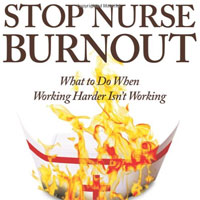
Stop Nurse Burnout: What to Do When Working Harder Isn’t Working
The first step-by-step manual for any nurse in any specialty to stop nurse burnout, build a more ideal career and a more balanced life. Chart your course from Nurse Burnout to Your Ideal Career using this first comprehensive... read more
Association between perioperative fluid administration and postoperative outcomes
Irrespectively to the amount of perioperative fluid administered, goal-directed therapy (GDT) strategy reduces postoperative complications, but not perioperative mortality. The metanalysis included 21 RCTs enrolling 2,729... read more