Tag: ICU
Models of Peer Support to Remediate Post-Intensive Care Syndrome
A number of different models of peer support are currently being developed to help patients and families recover and grow in the post-critical care setting. Via an iterative process of in-person and email/conference calls,... read more
Humanizing the ICU Experience with Enhanced Communication
Decisions to limit therapy (DTLT) are routine for ICU physicians. Although breaking bad news is one of the most difficult tasks clinicians face, ongoing communication is even more crucial as families (not necessary following... read more
Focus on Clinical Trial Interpretation
In a recently published meta-epidemiological study of 604 randomised clinical trials (RCTs) published between 1977 and 2018 from 53 Cochrane systematic reviews in critical care, less than 7% of the RCTs had overall low risk... read more
Critical Care and the COVID-19 Outbreak in Italy: Early Experience and Forecast
There was an immediate sharp increase in ICU admissions from day 1 to day 14. The increase was steady and consistent. Publicly available data indicate that ICU admissions (n = 556) represented 16% of all patients (n = 3420)... read more
Decrease Delirium in Older ICU Adults Using Music
Researchers from the Regenstrief Institute and Mayo Clinic are leading the first study to test whether exposure to music can decrease delirium in older adults who are receiving mechanical ventilation in the Intensive Care... read more
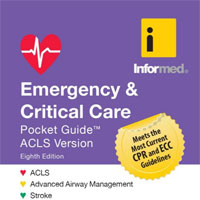
Emergency & Critical Care Pocket Guide
The most popular pocket reference in emergency nursing - now in a new edition! The Emergency amp; Critical Care Pocket Guide has been an essential resource for physicians, paramedics, and nurses for over a decade. The... read more
Intensive Care Unit in Disaster
This issue of Critical Care Clinics, guest edited by Drs. Marie Baldisseri, Mary Reed, and Randy Wax, in collaboration with Consulting Editor John Kellum, is devoted to Intensive Care Unit in Disaster. Topics in this... read more
ICU Risk Factors and Outcomes for Each Delirium Subtype
Although included studies reported on many subtype-specific risk factors (hypoactive, hyperactive) and outcomes, heterogeneity in reporting and methodological quality limited the generalizability of the results and the evidence... read more
Instrumental Activities of Daily Living Related to ARDS Survivors’ Quality of Life
Instrumental Activities of Daily Living (IADL), not body functions & structures measures, are related to ARDS survivors' quality of life and should be included in future studies. Bringing greater consistency to outcomes... read more
Severe Influenza in Critically Ill Patients
The present review summarizes current knowledge on pathogenesis and clinical manifestations of severe influenza. Immunological dysfunction during viral infection correlates with severity and mortality among ICU patients.... read more
Comparison of outcomes between vertical and transverse skin incisions in percutaneous tracheostomy for critically ill patients
This retrospective study showed that transverse skin incisions in PTs for critically ill patients, resulted in a significant decrease in overall complications, particularly ulcers in the tracheostomy site. Of the 458... read more
Respiratory Support for Patients with COVID-19 Infection
Coronavirus disease 2019 (COVID-19) has affected more than 50 countries so far this year. Xiaobo Yang and colleagues described in their single-centered, retrospective, observational study that 52 of 710 patients with confirmed... read more
Impact of Protocolized Diuresis for De-resuscitation in the ICU
Using a diuresis protocol for volume de-resuscitation, we demonstrated a significant decrease in net cumulative fluid balance at 72 h following shock resolution, with potential benefit on clinical outcomes including renal... read more
Relative Hypoglycemia in Diabetic Patients With Critical Illness
In ICU patients with diabetes, relative hypoglycemia is common, increases with higher hemoglobin A1C levels, and is a modifiable risk factor for both mortality and subsequent absolute hypoglycemia. These findings provide... read more
Association of Initiation of Dialysis with Hospital Length of Stay and Intensity of Care in Older Adults With Kidney Failure
In this cohort study, compared with non-dialysis care, patients who received maintenance dialysis spent more time in the hospital and were more likely to be admitted to intensive care units. This finding suggests trade-offs... read more
Harmful Effects of Mechanical Ventilation on Neurocognitive Functions
Whether mechanical ventilation (MV) induces neurotoxicity that can trigger or accelerate chronic cognitive disorders is controversial. The relationship between MV and neurocognitive impairment, that persisted at hospital... read more
Clinical Characteristics of Coronavirus Disease 2019 in China
During the first 2 months of the current outbreak, Covid-19 spread rapidly throughout China and caused varying degrees of illness. Patients often presented without fever, and many did not have abnormal radiologic findings. The... read more
Severe SARS-CoV-2 Infections: Practical Considerations for Intensivists
On December 31, 2019, China reported cases of respiratory illness in humans appearing first in Wuhan, Hubei Province, that involved a novel coronavirus SARS-CoV-2 (aka 2019-nCoV). This new emergency is a zoonotic disease... read more
Dealing with Internet-based Information Obtained by Families of Critically Ill Patients
The increasing availability of web-based health information resources should foster intensivists to step out of their comfort zone and encourage families to discuss their online discoveries. The majority of families of... read more
Survivorship Will Be the Defining Challenge of Critical Care in the 21st Century
Distracted by the high mortality rate of critical illness, we tend to overlook the essential fact that most patients survive the intensive care unit (ICU). Every year, millions of patients are discharged from the ICU... read more
Recognition, Assessment, and Pharmacotherapeutic Treatment of Alcohol Withdrawal Syndrome in the ICU
Alcohol withdrawal syndrome (AWS) is a complex neurologic disorder that develops after an acute reduction in or cessation of chronic alcohol consumption that alters neurotransmitter conduction. The incidence of AWS in the... read more
Methylnaltrexone for Treatment of Opioid-induced Constipation in Critically Ill Patients
No evidence to support the addition of methylnaltrexone to regular laxatives for the treatment of opioid-induced constipation in critically ill patients; however, the confidence interval was wide and a clinically important... read more