
Tag: ICU
Distance Between the Tips of Central Venous Catheters Does Not Depend on Same or Opposite Site Access
Central venous catheters (CVCs) are routinely required in the intensive care unit (ICU) for infusion of drugs, often concurrently with central venous dialysis catheters (CVDCs) for renal replacement therapy (RRT). Increased... read more
Economic Evaluation of a Patient-Directed Music Intervention for ICU Patients Receiving Mechanical Ventilatory Support
Music intervention has been shown to reduce anxiety and sedative exposure among mechanically ventilated patients. The aim of this study was to examine ICU costs for patients receiving a patient-directed music intervention... read more
An assessment of repeat computed tomography utilization in the emergency department in the setting of blunt trauma
Two CT scans performed during blunt trauma encounters demonstrated mixed benefit and were associated with an increased hospital LOS. Additionally, IV contrast was associated with lower rates of AKI. Of 5787 patient encounters,... read more
Critical Pediatric Heart Deaths Drop by 24% at Hospitals With Cardiac ICUs
Major complications fall by 12%, time on a ventilator declines by 13% among children in the cardiac ICU at PC4 hospitals As a pediatric cardiology fellow nearly a decade ago, Michael Gaies remembers asking hospital colleagues... read more
In-line Filtration of Intravenous Infusion May Reduce Organ Dysfunction of Adult Critical Patients
In-line filtration with finer 0.2 and 1.2 μm filters may be associated with less organ dysfunction and less inflammation in critically ill adult patients. Comparing fine filter vs control filter cohort, respiratory... read more
Outcomes of VV ECMO When Stratified by Age
The purpose of this study was to evaluate survival to hospital discharge for patients on venovenous extracorporeal membrane oxygenation (VV ECMO) when stratified by age. We performed a retrospective study at single, academic,... read more
Post-extubation Dysphagia
Despite having the tools and techniques for tracheal intubation for > 4000 years, and performing oral intubation with positive pressure mechanical ventilation for > 50 years, only recently has attention focused on... read more
Family Care Rituals in the ICU to Reduce Symptoms of PTSD in Family Members
Offering opportunities such as family care rituals for family members to be involved with providing care for family members in the ICU was associated with reduced symptoms of post-traumatic stress disorder (PTSD). This... read more
Pulmonary Artery Catheters for Adult Patients in ICU
Pulmonary Artery Catheters (PAC) is a diagnostic and haemodynamic monitoring tool but not a therapeutic intervention. Our review concluded that use of a PAC did not alter the mortality, general ICU or hospital LOS, or cost... read more
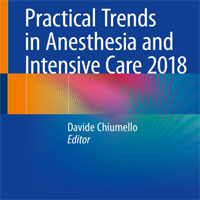
Practical Trends in Anesthesia and Intensive Care 2018
This book offers an essential guide to managing the most-debated hot topics of practical interest in anesthesia and intensive care. It reviews the state of the art in issues concerning both intensive care medicine and anesthesia,... read more
Triage and Flow Management in Sepsis
Septic patients had a lower priority for ICU admission and longer waiting times for an ICU vacancy than patients with other critical conditions. Overall, this implied a 2.7-fold increased risk of mortality in septic patients. The... read more
Critical Care Doctors Placed Humans in Suspended Animation For The First Time
Critical care doctors have placed humans in suspended animation for the first time, as part of a trial in the US that aims to make it possible to fix traumatic injuries that would otherwise cause death. Samuel Tisherman,... read more
Serum Creatinine in the Critically Ill Patient With Sepsis
A 73-year-old man underwent esophageal resection for cancer. He had a history of hypertension that was treated with an angiotensin receptor blocker. Preoperative estimated glomerular filtration rate (GFR) was 98 mL/min/1.73... read more
Long-term Cognitive Impairment After ARDS
Reducing the practical burden of cognitive recovery following critical illness depends crucially on understanding the links between brain injury and lung injury. New deficits in learning and memory, and new development... read more
Low-flow Assessment of Current ECMO/ECCO2R Rotary Blood Pumps and the Potential Effect on Hemocompatibility
The role of blood pumps in contributing to adverse effects at the lower blood flow rates used during ECCO2R is shown here to be significant. Current rotary blood pumps should be used with caution if operated at blood... read more
Anxiety, Depression and PTSD After Critical Illness
Survivors of intensive care are known to be at increased risk of developing longer-term psychopathology issues. We present a large UK multicentre study assessing the anxiety, depression and post-traumatic stress disorder... read more
Association of Corticosteroid Treatment With Outcomes in Adult Patients With Sepsis
In this meta-analysis of 37 RCTs (including 9564 patients), corticosteroid treatment was significantly associated with reduced 28-day mortality, ICU mortality, and in-hospital mortality among patients with sepsis. However,... read more
Probiotics Linked to Bloodstream Infections in ICU Patients
People carry a community of microbes in and on our bodies, and they can have a powerful influence on our physiology in many ways. Probiotics, which are live microbes, are intended to improve human health, and they sometimes... read more
Intensivists’ Preferences for Patient Admission to ICU
ICU consultants vary in the importance they give to different factors in deciding who to prioritize for ICU admission. Transparency regarding which factors have been considered in the decision-making process could reduce... read more
Conservative Oxygen Therapy during Mechanical Ventilation in the ICU
In adults undergoing mechanical ventilation in the ICU, the use of conservative oxygen therapy, as compared with usual oxygen therapy, did not significantly affect the number of ventilator-free days. The number of ventilator-free... read more
Conditional Survival With Increasing Duration of ICU Admission
This is an observational study of three intensive care databases two in the United States (Medical Information Mart for Intensive Care III and electronic ICU) and one in United Kingdom (Post Intensive Care Risk-Adjusted Alerting... read more
Cardiogenic Shock – The Next Level & Mechanical Circulatory Support
We could center this discussion about the SCAI paper that came out (attached). A nice collaborative expert panel piece outlining a CS pyramid used quickly at the bedside in the ED, ICU, Cath Lab, etc to help us identify these... read more