Evaluation of an Advanced Critical Care Echocardiography Program
Trainees perceived lack of time and limited access to supervision as major barriers to course completion. Nevertheless, successful portfolio completion was related to factors other than protected time in the echocardiography... read more
CRT-targeted Fluid Resuscitation vs. Lactate-targeted in Septic Shock
Capillary refill time (CRT)-targeted fluid resuscitation in septic shock was not superior to a lactate-targeted one on early fluid administration or fluid balances. However, it was associated with comparable effects on regional... read more
Mental Health Morbidity Among Caregivers
While much of the research on post-ICU mental health morbidity has focused upon the survivors themselves, emerging data shows that caregivers of ICU patients are similarly impacted. The collective sequelae experienced... read more
Public Sepsis Awareness Campaigns Should Be Created Based on Local Data
Although public knowledge of sepsis and its mortality is generally low, some countries have high awareness and knowledge, and as such, any public awareness campaigns should be created based on local data. This will also... read more
Trends in Time to Extubation for Pediatric Postoperative Cardiac Patients
In this large, multicenter database study, early extubation rates in postoperative cardiac patients did not significantly change between 2009 and 2018. Centers that performed early extubation more frequently did not have... read more
MECA in Medical Emergency Situations Significantly Reduced Failure Rates
In our simulation, the use of medical emergency cognitive aid (MECA) in medical emergency situations significantly reduced failure rates. The use of MECA was widely accepted, and MECA were easy to use. In a high percentage,... read more
Optimizing the Design and Analysis of Future AKI Trials
Acute kidney injury (AKI) is a complex clinical syndrome associated with an increased risk of morbidity and mortality, particularly in critically ill and perioperative patient populations. Most AKI clinical trials have... read more
Fear and Insight in the ICU Bed
Mid-morning dressing changes, hours wasted, going through each cut methodically. Dressing off, wound cleaned, redressed. The brunt of pain dealt with by nature before giving in. The intensive care unit (ICU) nurse offers... read more
Feelings of Strangeness in ICU Patients
After several weeks in the intensive care unit (ICU) following a lung infection, Mr Pol wakes up from a coma and gradually becomes aware of his situation. The healthcare team rejoice in the successful outcome of his extubation:... read more
Intravenous Tenecteplase vs. Alteplase for Acute Ischemic Stroke
Between Dec 10, 2019, and Jan 25, 2022, 1,600 patients were enrolled and randomly assigned to tenecteplase (n=816) or alteplase (n=784), of whom 1577 were included in the intention-to-treat (ITT) population (n=806 tenecteplase;... read more
Evolving Crisis Standards of Care and Ongoing Lessons from COVID-19
Crisis Standards of Care (CSC) inform decisions on medical care during a large-scale crisis such as a pandemic or natural disaster, eliminating the need to make these decisions at the bedside without protections or guidance.... read more
Temporal Trends and Hospital Variation in Time-to-Antibiotics Among Veterans Hospitalized with Sepsis
This cohort study across nationwide VA hospitals found that time-to-antibiotics for sepsis has declined over time. However, there remains significant variability in time-to-antibiotics not explained by patient characteristics,... read more
Benchmarking Saliency Methods for Chest X-ray Interpretation
Saliency methods, which "explain" deep neural networks by producing heat maps that highlight the areas of the medical image that influence model prediction, are often presented to clinicians as an aid in diagnostic decision-making.... read more
A Decade of Progress in Critical Care Echocardiography
Critical care echocardiography (CCE) is now widely accepted by the critical care community as a valuable tool in the ICU and emergency department, and in perioperative settings. It allows rapid and accurate diagnosis,... read more
High Flow Nasal Cannula: Physiological Effects and Clinical Applications
This book presents the state of the art in high-flow nasal cannula (HFNC), an oxygen therapy technique that has recently proven to be a very promising approach to supporting respiratory function in several medical fields. In... read more
Who the hell would want to work in healthcare?
Our health sector is in crisis. Doctors are overworked, nurses are burnt out and underpaid. Many healthcare professionals are coming close to retirement and others are simply leaving their professions for greener pastures.... read more
Machine Learning Model Validation for Prediction of Potential PICU Transfer
We developed and externally validated a novel machine learning model that identifies ICU transfers in hospitalized children more accurately than current tools. Our model enables early detection of children at risk for... read more
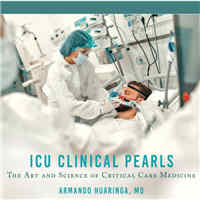
ICU Clinical Pearls: The Art and Science of Critical Care Medicine
ICU CLINICAL PEARLS summarizes the experience of 40 years of life in the intensive care units where the sickest patients come or are sent in the hope to return to a life of reasonable quality. Arguably the safest place in... read more
New Study for Opioid Use Patterns
The purpose of this study is to as certain and describe the trajectories of pain experienced by a diverse group of opioid naive patients who are prescribed an opioid analgesic for acute pain. Using a digital health-based... read more
New-onset Atrial Fibrillation in the ICU
Patients who develop new-onset atrial fibrillation (NOAF) during an ICU admission are at a higher risk of in-hospital death and readmission to hospital with AF, heart failure, and stroke than those who do not. Using the... read more
Difficulties Faced by Nurses Who Care For Patients with Delirium in the ICU
We developed a difficulty scale for nurses caring for patients with delirium in the intensive care unit and confirmed its reliability and validity. The difficulty factors were developed with the intention to identify educational... read more
Acquired Weakness and Hospital Functional Mobility Outcomes Following Invasive Mechanical Ventilation in Patients with COVID-19
In critically ill COVID-19 patients, the incidence of ICUAW and acute gait dependence were high. Our study identifies factors influencing both outcomes. Future studies should investigate optimal COVID-19 ARDS management and... read more