
Seamless Surveillance: The Future of NICU Vital Sign Monitoring
A comprehensive systematic review evaluated 60 observational studies published between 2014 and 2024 to assess the potential of next-generation non-contact and wireless wearable technologies for vital sign monitoring in the... read more
Predictive Power: Wearable AI Foreshadows Hospital Deterioration
This study successfully developed and validated a deep learning-based continuous in-hospital deterioration prediction model using data collected from wearable chest-worn monitors. The researchers piloted two different Continuous... read more
BICARICU-2: Bicarb Infusions Curb Dialysis Needs in Acidotic AKI
The BICARICU-2 trial investigated the use of sodium bicarbonate (NaHCO3) infusions for critically ill patients suffering from severe acidemia and Acute Kidney Injury (AKI), most often due to septic shock. While the trial,... read more
The Falling Count: Platelet Trajectory Post-CRRT Predicts Mortality in AKI
This retrospective cohort study examined the dynamic changes in platelet counts—the platelet trajectory—around the initiation of Continuous Renal Replacement Therapy (CRRT) in over 2,200 critically ill adults with Acute... read more
Salinity Signal: Low Sodium-Chloride Difference Predicts Higher Mortality in Critically Ill Adults
This retrospective cohort study investigated the relationship between the easily calculated Sodium–Chloride Difference (SCD) at the time of ICU admission and the patient's subsequent 30-day mortality risk in 1,726 critically... read more
Mechanical Ventilation in Patient with Respiratory Failure
This handbook covers the principles of mechanical ventilation, making them easy to understand and apply in clinical settings. Presented in an accessible style and supplemented by a wealth of illustrations and graphs, it includes... read more
The Dual Deception: Amlodipine and Baclofen Overdose Mimics Brain Death and Triggers Cardiogenic Shock
This case study highlights the profound diagnostic challenge and dramatic presentation of a combined-drug overdose involving amlodipine and baclofen, a novel and previously unreported toxicological combination. Toxicological... read more
Coordinated Critical Care: Essential ICU Strategies for Severe Trauma
The effective management of severe trauma patients hinges on seamless, perfect coordination across prehospital care, the trauma bay, and the ICU. Once in the Intensive Care Unit, the primary goals are the prompt control of... read more
Handbook of Evidence-Based Critical Care
This updated and revised edition of the classic bedside pocket reference remains the gold standard in critical care medicine. The new edition maintains Dr. Marik's trademark humor and engaging writing style, while adding... read more
The Paradox of Recovery: Faster APACHE II Decline Does Not Guarantee Better Trauma Outcomes
This study investigated a novel metric, APACHE/m (the average daily decrease in the APACHE II score), to determine if a faster rate of physiological improvement predicts better post-ICU outcomes in trauma patients. While... read more
VA-ECMO in Septic Shock: A High-Stakes, High-Uncertainty Rescue
The use of Veno-Arterial Extracorporeal Membrane Oxygenation (VA-ECMO) as a rescue therapy for refractory septic shock remains a challenging, context-dependent, and uncertain strategy in adults. Current evidence shows... read more
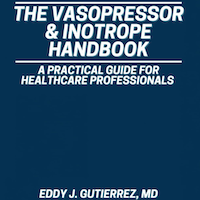
The Vasopressor & Inotrope Handbook: A Practical Guide for Healthcare Professionals
An indispensable resource for physicians, nurse practitioners, physician assistants, pharmacists, and nurses in managing critically ill patients. This comprehensive guide delves deep into the world of vasopressors and inotropes,... read more
Vasoactive Guard: Testing Arginine-Vasopressin to Shield Kidneys Post-Liver Transplant
This clinical trial investigates whether a low dose of argipressin (the active substance in REVERPLEG) administered during liver transplantation surgery can help prevent Acute Kidney Injury (AKI), a severe and common post-operative... read more
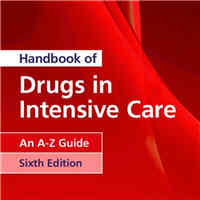
Handbook of Drugs in Intensive Care: An A-Z Guide
Now in its sixth edition, the Handbook of Drugs in Intensive Care is the essential guide to using drugs safely and effectively in the intensive care setting. The book is split into two sections: an A-Z guide to the drugs... read more
Scarred Lungs: Identifying Fibrosis Risk After COVID-19 ARDS
This substudy of the large, multicenter RECOVIDS cohort investigated the predictive factors for developing fibrotic changes (FC) in survivors of COVID-19-related Acute Respiratory Distress Syndrome (ARDS) six months after... read more
DeLLiriuM: LLMs Predict Delirium Risk in the ICU
DeLLiriuM is a novel large language model (LLM) designed to predict delirium in Intensive Care Unit (ICU) patients after the initial 24 hours of admission, using structured electronic health records (EHR). What sets DeLLiriuM... read more
Conquer Your Toughest Gift-Giving Challenge (and Save Big!)
Ready to sleigh your holiday shopping list before the stress sets in? From the avid baker and the dedicated gamer to the crafty artist, you'll find the perfect, thoughtful gift for every interest at Amazon's holiday store. You... read more
Gut Feeling vs. Data: SDD Doesn’t Beat Standard Care for Ventilated Patients
This multi-center trial, spanning 26 Intensive Care Units (ICUs) in Australia and Canada and involving over 20,000 critically ill patients on mechanical ventilation, put a long-debated practice, Selective Decontamination... read more
The Crystal Ball of the ICU: Machine Learning Predicts Who’s Staying and Who’s Not
The PREMIER Study dove into the data of 996 patients experiencing Acute Hypoxemic Respiratory Failure (AHRF) who had been on mechanical ventilation (MV) for at least two days, aiming to develop a reliable way to predict their... read more
Defending the Vulnerable: Neutropenic Sepsis Outcomes Improve Despite Higher Risk
A decade-long, single-center study in a French ICU examined the characteristics and outcomes of 185 consecutive patients admitted with neutropenic sepsis or septic shock between 2012 and 2022. The analysis revealed a... read more
SOFA-2: Close, But Not Quite the Ideal Measure of Organ Failure
The SOFA-2 (Sequential Organ Failure Assessment) score represents the latest effort to provide a simple, reliable, and continuous measure of organ dysfunction in critically ill patients, a concept first outlined decades ago.... read more
Beyond Liver Failure: MELD-XI Predicts Sepsis Mortality
This retrospective cohort study investigated the utility of the MELD-XI (Model for End-Stage Liver Disease-Excluding INR) score as a predictor of 30-day mortality in over 16,600 adult ICU patients with sepsis, using data... read more