Tag: ICU
Consequences of Cardiopulmonary Bypass: What the Intensivist Needs to Know
Cardiopulmonary bypass (CPB) is common for most cardiac surgeries. CPB drains blood from the heart and returns it to the proximal systemic circulation allowing perfusion during the operative period. It was pioneered in 1951... read more
The Pooled Prevalence of Pulmonary Embolism in Patients with COVID-19
It is needed to pay more attention to the relatively high prevalence of pulmonary embolism (PE) in COVID-19 patients, especially in ICU wards. Future studies that will explore the detection method considering high infectivity... read more
Coagulopathy of COVID-19
Severe acute respiratory syndrome coronavirus 2/coronavirus disease 2019 frequently induces hypercoagulability with both microangiopathy and local thrombus formation, and a systemic coagulation defect that leads to large... read more
Outcomes of COVID-19 Patients Admitted to Australian ICUs During Early Pandemic Phase
During the early phase of the pandemic in Australia, patients admitted to ICU with COVID-19 had lower mortality and longer length of stay than reported from other regions. These findings reinforce the importance of ensuring... read more
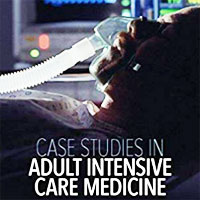
Case Studies in Adult Intensive Care Medicine
Guiding FFICM and EDIC exam candidates through the intensive care medicine curriculum, this book provides 48 case studies mapped to eight key areas of study in the UK and European syllabuses. Cases include clinical vignettes,... read more
Quality of Life of Intensive Care Unit-Acquired Weakness Symptoms in Long-Term Intensive Care Survivors
Intensive care unit-acquired weakness (ICUAW) symptoms were disturbingly common in the majority of long-term survivors, indicating that symptoms persist up to 10y and frequently impair QoL. However, only a small number of... read more
Sepsis and the Obesity Paradox: Size Matters in More Than One Way
Our retrospective analysis suggests that although patient size (i.e., body mass index) is a predictor of in-hospital death among all-comers with sepsis—providing further evidence to the obesity paradox—it adds that illness... read more
Effects of Telemedicine ICU Intervention on Care Standardization and Patient Outcomes
In this pre-post observational study, telemedicine ICU intervention was associated with improvements in care standardization and decreases in ICU and hospital mortality and length of stay. The mortality benefits were mediated... read more
Training Multidisciplinary Healthcare Workers to Reinforce ICUs in Times of Need
ESICM is to carry out a C19 SPACE programme funded by the European Commission for the training of multidisciplinary healthcare professionals not regularly working in ICUs, to give extra support to ICUs during the COVID-19... read more
Effect of Hydrocortisone on Mortality and Organ Support in Patients with Severe COVID-19
Among patients with severe COVID-19, treatment with a 7-day fixed-dose course of hydrocortisone or shock-dependent dosing of hydrocortisone, compared with no hydrocortisone, resulted in 93% and 80% probabilities of superiority... read more
Bacterial Profile of Ventilator Associated Pneumonia: Concept, Review, Methods, Observations, Inference
ICU is a hotbed of infections and measures are taken to prevent these infections. Ventilator associated pneumonia is one of the Intensive Care Unit related infections. This book tells us what ventilator associated pneumonia... read more
Shorter Resident Shifts May Not Improve Patient Safety
Residents who worked schedules that eliminated extended shifts made a greater number of serious errors than those who worked schedules with shifts of 24 or more hours, a trial in the New England Journal of Medicine reported. The... read more
Evaluation of SARS-CoV-2 Serology Assays Reveals a Range of Test Performance
Appropriate use and interpretation of serological tests for assessments of severe acute respiratory syndrome coronavirus 2 (SARS-CoV-2) exposure, infection and potential immunity require accurate data on assay performance.... read more
Artificial Neural Networks Improve Prediction and Risk Classification in ICU Patients
A supervised machine learning model using artificial neural networks (ANN) predicted neurological recovery, including survival excellently, and outperformed a conventional model based on logistic regression. Among the data... read more
Respiratory Support in Patients with COVID-19
Non-invasive respiratory support could be useful in treating COVID-19-related acute respiratory failure (ARF). A rational use of different techniques (oxygen therapy, CPAP, NIV or HFOT) by a trained pulmonologist could allow... read more
Variation in Hospital Visitor & ICU Communication Policies Due to COVID-19
A new study documents how 49 of those hospitals reacted, and how those efforts varied. It finds that virtually all hospitals put in place a "no visitors" blanket policy. But 59% of hospitals did allow some exceptions to this... read more
Perceived Barriers to Rapid Response Team Activation Among Nurses
The purpose of this literature review was to investigate the major barriers nurses face when it is necessary to seek additional assistance and resources by calling the rapid response team (RRT) in order to manage and stabilize... read more
ICU Capacity is More About the Clinicians Than The Number of Beds
Each time communities experience surges of COVID-19, concerns arise over the availability of hospital and intensive care unit beds in affected regions. To monitor ICU capacity, several states have begun to track and publicly... read more
Philips Launches COVID-19 Rapid Equipment Deployment Kit for ICUs
Royal Philips introduced its Rapid Equipment Deployment Kit for ICU ramp-ups, allowing doctors, nurses, technicians and hospital staff to quickly support critical care patient monitoring capabilities during the COVID-19 pandemic.... read more
Which One is Better? Chlorhexidine-impregnated Sponge or Chlorhexidine Gel Dressing
A similar infection risk for gel-dress and sponge-dress. Gel-dress showed fewer dressing disruptions. Concomitant use of CHG for skin disinfection and CHG-impregnated dressing may significantly increase contact dermatitis. A... read more
Laboratory Features of Severe vs. Non-severe COVID-19 Patients in Asian Populations
This meta-analysis provides evidence for the differentiation of severe cases of COVID-19 based on laboratory test results at the time of ICU admission. Future well-methodologically designed studies from other populations... read more
Acute on Chronic Liver Failure in the ICU
Liver Failure may constitute one of the least favorite disease processes for anyone routinely taking care of critically ill patients. Intensivist and hepatology circles have begun to describe a specific population known as... read more