
Tag: ICU
Lung Ultrasound Speeds Up VAP Diagnosis and Improves ICU Outcomes
This prospective randomized controlled study investigated whether using Lung Ultrasound (LUS) as a primary bedside tool for diagnosing Ventilator-Associated Pneumonia (VAP) could outperform the standard radiological approach... read more
Sedation and Analgesia for the Pediatric Intensivist: A Clinical Guide
This book provides a comprehensive overview on sedation and analgesia for the pediatric intensivist. Divided into two primary sections, the text presents a framework on how to care for patients who need sedation, analgesia,... read more
More Than Just Acid: Navigating the Complexities of Lactate in Critical Care
Lactate is a vital marker in critical care, but its meaning is complex, reflecting an interplay of perfusion, metabolism, organ function, and stress. Clinicians must adopt a nuanced, multimodal approach to interpretation,... read more
Predicting the Next 48 Hours: Machine Learning Delivers Dynamic, Interpretable ICU Mortality Forecasts
The LGBM-48h algorithm provides a dynamic, clinically applicable, and interpretable framework for 48-hour ICU mortality risk prediction. By establishing mortality risk-based categories and showing how key features change... read more
Improving Critical Care Survivorship: A Guide to Prevention, Recovery, and Reintegration
This book, just published, provides a comprehensive overview of improving critical care survivorship. Comprised of four sections, the text presents interventions that can be used to improve patient outcomes and reduce the... read more
Nursing Care and ECMO
This highly informative book provides essential insights for ICU nurses at ECMO centers around the world, who face the substantial challenges involved in the management of ECMO patients. Above all, it meets their training... read more
ICU Readmission Prediction Using Deep Learning Models
This systematic review provides the first comprehensive synthesis of the literature on the application of deep learning (DL) models to the task of predicting ICU readmission, offering insights into current approaches and... read more
The Antibiotic Balancing Act in ICU: Optimizing Use to Beat Resistance and Save Lives
The continuous fight against antibiotic resistance demands a routine and multidisciplinary strategy for antibiotic optimization in the ICU. Regular review and updating of these practices, based on local data on pathogens... read more
Workbook on Renal Replacement Therapy in ICU (ISCCM)
This workbook focuses on renal replacement therapy in ICU. The incidence of acute kidney injury in critically ill patients is increasing steeply. Acute kidney injury in this setting is associated with high morbidity and mortality.... read more
The MAP-SEPS Protocol: A New Frontier in Detecting Early Sepsis by Targeting Microcirculation
The MAP-SEPS trial is a prospective observational study designed to determine if a comprehensive, multimodal approach to peripheral perfusion monitoring can improve the early detection of sepsis and organ failure in critically... read more
The Power and Pitfalls of AI: GPT Masters ICU Prediction But Struggles with ED Discharge
This retrospective proof-of-concept study investigated GPT-4o's ability to predict disposition (admission vs. discharge) for high-acuity ED patients with complex respiratory cases who required pulmonology consultation and... read more
Beyond SOFA: Sepsis ImmunoScore Redefines Risk Stratification for Mortality and ICU Admission
This multicenter observational study involving over 6,000 adult patients found that the Sepsis ImmunoScore, an AI-based tool, significantly outperformed six conventional clinical scores and biomarkers in predicting sepsis,... read more
Medication Management: Spontaneous vs. Traumatic Intracerebral Hemorrhage (sICH vs. tICH)
Pharmacological management for BP control and seizure prophylaxis differs between tICH and sICH. ICH etiology should be accounted for in determining appropriate BP goals and the necessity of seizure prophylaxis. Intracerebral... read more
Why Early mHLA-DR Fails and Dynamic Monitoring is Key to Immunosuppression in Septic Shock
This 20-year study of 1,023 septic shock patients confirms that the immune marker mHLA-DR is a robust biomarker for identifying the most immunosuppressed patients who face a higher risk of death and ICU-acquired infections. The... read more
Handbook of ICU Therapy
This popular handbook provides a practical guide to managing common and important problems in the critically ill patient, as well as sufficient background information to enable understanding of the principles and rationale... read more
Unmasking the Burden: High IAH Prevalence, Associated Morbidity, and Novel Mortality Predictors in Critical Care
This study on 85 critically ill patients revealed a high prevalence of Intra-Abdominal Hypertension (IAH) (54.1%). Key Findings: Primary Contributors: The main factors driving IAH were intravenous (IV) fluid administration... read more
A Critical Curve: Unveiling the U-Shaped Relationship Between the TG/HDL Ratio and All-Cause Mortality in Obese Sepsis
This study analyzed 938 obese sepsis patients to investigate the prognostic significance of lipid metabolism abnormalities, focusing specifically on the Triglyceride-to-HDL (TG/HDL) ratio as a predictor of all-cause mortality. Key... read more
Beyond Creatinine: A Systematic Review of Biomarker Performance (NGAL, KIM-1, TIMP-2·IGFBP7) for Acute Kidney Injury in the ICU
This systematic review analyzed 35 studies to assess the performance of three key Acute Kidney Injury (AKI) biomarkers—NGAL, KIM-1, and TIMP-2 ⋅ IGFBP7—in the Intensive Care Unit (ICU) setting. NGAL (Neutrophil Gelatinase-Associated... read more
Peripheral Perfusion-Targeted Resuscitation Improves Outcomes in Septic Shock
This study, which included 200 sepsis and septic shock patients in the emergency department, compared the effectiveness of management guided by peripheral perfusion measurements against standard care protocols. The study... read more
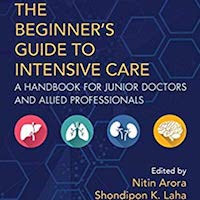
The Beginner’s Guide to Intensive Care: A Handbook for Junior Doctors and Allied Professionals
Ideal for any medic or health professional embarking upon an intensive care rotation or specialism, this simple bedside handbook provides handy, pragmatic guidance to the day-to-day fundamentals of working in an intensive... read more
Rethinking Blood Pressure Goals: Why High vs. Low MAP Targets Affect Patients with Septic Shock
Based on a study of 776 patients, there's no evidence that different groups of people with septic shock respond differently to a high versus low mean arterial pressure (MAP) target. In other words, there wasn't a "one-size-fits-all"... read more
Reduce Delirium in Critically Ill Patients Using Depth of Sedation Monitors
Delirium impacts up to 80% of patients in the intensive care unit (ICU). Current clinical sedation scales depend on subjective measurements, which are unreliable. We hypothesize processed EEG (pEEG) may be effective at monitoring... read more