Tag: research
Patients Under Mechanical Ventilation Are Highly Perceptive
This meta-synthesis provides insights into the perception of intensive care patients under Mechanical Ventilation (MV) who are continuously observing their own lives. This process is complex and involves a highly differentiated... read more
Association Between Aspirin and AKI in Critical Patients with Chest Trauma
This analysis of two datasets reveals that aspirin usage is associated with an increased risk of acute kidney injury (AKI) in critical patients with chest trauma; however, no significant association was observed between the... read more
Evaluation of Vitamin D Supplementation in Critically Ill Patients
Vitamin D supplementation in critically ill patients may shorten ICU or hospital length of stay, improve SOFA scores, or reduce the duration of mechanical ventilation. Its ability to lower 28-day mortality remains uncertain,... read more
The Triglyceride Glucose Index and Delirium Risk in Sepsis Patients
The triglyceride glucose (TyG) index represents a straightforward and efficacious instrument for nursing staff to ascertain the likelihood of delirium in patients with sepsis during the routine monitoring of their condition.... read more
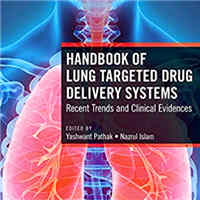
Handbook of Lung Targeted Drug Delivery Systems: Recent Trends and Clinical Evidences
Handbook of Lung Targeted Drug Delivery Systems: Recent Trends and Clinical Evidences covers every aspect of the drug delivery to lungs, the physiology and pharmacology of the lung, modelling for lung delivery, drug devices... read more
AKI and Mortality Predictors of Systemic Autoimmune Diseases and COVID-19
The present study highlights renal parameters and outcomes associated with various systemic autoimmune diseases and COVID-19. Patients who presented with low oxygen saturation (... read more
CAR-T Therapy – Critical Care Considerations of Chimeric Antigen Receptor
Despite significantly improving the treatment of blood cancers, CAR T-cell therapy still faces significant hurdles due to its complex and varied toxicities, which require ongoing research to optimize management; while understanding... read more
Implementing Bedside Percutaneous Tracheostomy and PUG Team to Reduce LOS
Thousands of critically ill patients every year in the United States receive tracheostomy and gastrostomy procedures. Recent research has investigated the benefits of a combined team approach to these procedures, with associated... read more
Factors Associated with Delayed Extubation in Post Cardiac Surgery Patients
The process of extubation is a crucial phase in postoperative care. By comprehending the elements that impact DE, healthcare providers can effectively allocate medical resources to enhance the success of weaning, extubation,... read more
Impact of Extended-course Oral Nirmatrelvir/Ritonavir in Established Long COVID
Extended courses of nirmatrelvir/ritonavir may have meaningful benefits for some people with Long COVID but not others. We encourage researchers to study how and why nirmatrelvir/ritonavir benefits some and what course length... read more
Association Between SHR and Mortality in Patients with Heart Failure Complicated by Sepsis
This study suggests that stress hyperglycemia ratio (SHR) may be a valuable predictor of prognosis in patients with heart failure combined with sepsis. Both high and low SHR values are associated with poorer outcomes.... read more
Plasma Proteome Temporal Changes Associated with Sepsis Mortality
Our proteomics approach revealed significant associations between changes in the plasma proteome within the first days of sepsis and mortality as well as disease severity. We identified and characterised the underlying... read more
Strong Ion Difference to Predict Mortality in Septic Shock: Mortality Prediction Model for Admission and 24-hour Mortality
Stewart's model examines the relationship between the movement of ions across biological membranes and the consequent changes in pH related to modifications in three dependent variables which are the strong ion difference... read more
Multidisciplinary Collaborative Bundled Care Improves Outcomes in ICU Patients with Endotracheal Intubation
Multidisciplinary analgesic and sedative bundled care has demonstrated the potential to decrease restraint use in patients undergoing endotracheal intubation and mechanical ventilation, reduce the need for analgesic and sedative... read more
Misunderstanding Buffering in Critical Illness
It is was disappointing to read the recent review in Intensive Care Medicine on buffering in metabolic acidosis. I consider this a "pre-Copernican" approach to acid–base that does not respect basic physical–chemical principles. The... read more
Personalized Therapies in ARDS
Acute respiratory distress syndrome (ARDS) can result from a variety of clinical conditions, causing lung injury either directly through local inflammation or indirectly because of systemic inflammatory mediators ARDS is... read more
Researchers to Study Online Therapy’s Potential to Prevent Cognitive Decline in ICU Survivors
Researchers from Indiana University Indianapolis, Regenstrief Institute and the IU School of Medicine’s Indiana Alzheimer’s Disease Research Center – led by Babar Khan, M.D., M.S., Sophia Wang, M.D., and Jesse Stewart,... read more
Implementing a Bedside Percutaneous Tracheostomy and Ultrasound Gastrostomy Team Reduces Length of Stay and Hospital Costs
Thousands of critically ill patients every year in the United States receive tracheostomy and gastrostomy procedures. Recent research has investigated the benefits of a combined team approach to these procedures, with associated... read more
Predictors of Weaning Failure in Ventilated ICU Patients
Predictors for weaning failure are widely researched. To date, 145 predictors have been investigated with varying intensity in 140 studies that are in line with the current weaning definition. It is no longer just individual... read more
Extended Prone Position and 90-Day Mortality in Mechanically Ventilated Patients with COVID-19
Extended prone positioning (PP) was associated with improved 90-d survival in subjects with COVID-19 undergoing mechanical ventilation for severe ARDS. These findings suggest the potential benefit of EPP in the management... read more
Skin Decontamination to Prevent ICU Infections
Intensive care unit (ICU)-acquired infections can be serious complications of medical care of critically ill patients. Despite multiple tested and implemented preventive measures for such infections, their incidence is persistently... read more
Relationship between Concentrations of Oxygen and Levels of Oxidative Stress in Patients Receiving Oxygen Therapy for Severe COVID-19 Pneumonia
We evaluated the potential of high-flow oxygen therapy to increase oxidative stress and inflammation in COVID-19 patients. Our observation of decreased MDA levels when transitioning hypertensive patients from high-flow to... read more