Awake prone positioning does not reduce the risk of intubation in COVID-19 treated with high-flow nasal oxygen therapy
To the best of our knowledge, this is the first multicenter study that prospectively evaluated the benefits and the role of HFNO combined with awake prone positioning in the prevention of intubation in an adjusted large cohort... read more
How Doctors Think
On average, a physician will interrupt a patient describing her symptoms within eighteen seconds. In that short time, many doctors decide on the likely diagnosis and best treatment. Often, decisions made this way are... read more

VTE and COVID-19: Would you like to know more?
Who wouldn't want to know more about a disease that has killed >1 million people to date, worldwide. Who wouldn't want to know more about the thromboembolic risk associated with COVID-19 when we have been told that the VTE... read more
Factors Associated to ICU Mortality in Critically Ill Patients Infected with COVID-19 in Spain
Older COVID-19 patients with higher APACHE II scores on admission, those who developed AKI grades II or III and/or septic shock during ICU stay had an increased risk-of-death. ICU mortality was 31%. A total of 663 patients... read more
Extracorporeal Cytokine Adsorption as an Alternative to Pharmacological Inhibition of IL-6 in COVID-19
With great interest we read the article by Convertino et al. discussing potential treatment targets for pharmacological immunomodulation in coronavirus disease 2019 (COVID-19) with acute respiratory distress syndrome (ARDS).... read more
Using Dynamic Variables to Guide Perioperative Fluid Management
Intravenous fluid administration is an integral part of patient management during anesthesia. This practice has a strong clinical rationale since a decrease in blood volume, either present before or developing during surgery,... read more
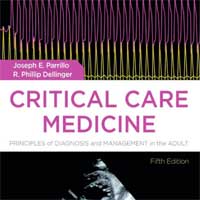
Critical Care Medicine: Principles of Diagnosis and Management in the Adult
Now completely revised to bring you up to date with the latest advances in the field, Critical Care Medicine: Principles of Diagnosis and Management in the Adult, 5th Edition, delivers expert, practical guidance on virtually... read more
Thrombosis and Bleeding in ECMO without Anticoagulation
Extracorporeal membrane oxygenation (ECMO) causes both thrombosis and bleeding. Major society guidelines recommend continuous, systemic anticoagulation to prevent thrombosis of the ECMO circuit, though this may be undesirable... read more
TEG for Hypocoagulable Patients with Non-Traumatic Bleeding
Thromboelastogram (TEG) has been extensively studied in trauma and surgical patients, but has not been well studied in nontraumatic bleeding, nor has its use been well evaluated in the emergency department. This study... read more
Clinical Communication with Families in the Age of COVID-19
The admission of a critically ill patient to an intensive care unit (ICU) is a distressing event for the patient, their family and friends, which has been amplified by the impact of the covid-19 pandemic. Many hospitals... read more
Effect of Early Activity Combined with Early Nutrition on Acquired Weakness in ICU Patients
This trial has the potential to identify a novel strategy for preventing or managing ICU-AW. The findings may increase the clinical knowledge about nutrition and mobilization interventions for people with ICU-AW, and contribute... read more
Monitoring of the Adult Patient on VA ECMO
Venoarterial extracorporeal membrane oxygenation (VA ECMO), a form of mechanical circulatory support, had its origins in the operating room as cardiopulmonary bypass and has evolved for use in the intensive care unit and... read more
Efficacy and Safety of a Paired Sedation and Ventilator Weaning
The purpose of this study is to determine the impact of a new RN/RRT (Registered Nurse/Registered Respiratory Therapist) directed 2-step protocol to wean patients off of a ventilator. This protocol involves daily attempts... read more
Endothelial Dysfunction Role During COVID-19
Emerging data suggest a crucial role of endothelial dysfunction during SARS-CoV-2 infection, as a direct target of the virus and inflammatory cytokines as well as the main actor in orchestrating a pro-inflammatory and pro-coagulant... read more
Stress Hyperglycemia and Mortality in Subjects With Diabetes and Sepsis
Stress-induced hyperglycemia is a relevant prognostic factor also in the presence of diabetes. Mild-to-moderate stress hyperglycemia is considered a protective reaction to providing fuel for the immune system and brain at... read more
FDA Authorized First Point-of-Care Antibody Test for COVID-19
U.S. Food and Drug Administration issued an emergency use authorization (EUA) for the first serology (antibody) point-of-care (POC) test for COVID-19. The Assure COVID-19 IgG/IgM Rapid Test Device was first authorized for... read more
Gastrointestinal Complications in Critically Ill Patients With and Without COVID-19
This study found a higher rate of gastrointestinal complications, including mesenteric ischemia, in critically ill patients with COVID-19 compared with propensity score–matched patients without COVID-19, suggesting a distinct... read more
Early Arterial Embolization and Mortality in Mechanically Ventilated Patients With Hemoptysis
The objective of this study was to clarify whether early intervention by arterial embolization reduced mortality in mechanically ventilated patients with hemoptysis. The results show that early intervention by arterial... read more
Pre-hospital Care & Interfacility Transport of 385 COVID-19 Emergency Patients
All participating air ambulance providers were prepared for COVID-19. Safe care and transport of suspected or confirmed COVID-19 patients is achievable. Most patients on primary missions were transported by ground. These... read more
Mortality Outcomes with Hydroxychloroquine and Chloroquine in COVID-19
No benefit of hydroxychloroquine or chloroquine on the survival of COVID-19 patients found. For hydroxychloroquine, the confidence interval is compatible with increased mortality or negligibly reduced mortality. Findings... read more
Risk of Death More Than Doubled in People with Both Flu and COVID-19
People infected with both flu and SARS-CoV-2 are more than twice as likely to die as someone with the new coronavirus alone, emerging evidence from England has shown. An analysis by Public Health England (PHE) of cases... read more
Measuring COVID-19 Fatalities Among EMS Providers
The devastating effects of the COVID-19 pandemic resonate around the world. Escalating infection and death rates are reported daily. While emergency medical services clinicians have been operating at the far forward front... read more