
Pressure Support Ventilation During ECMO Support in Patients with ARDS
In the initial phases of veno-venous extracorporeal membrane oxygenation (VV ECMO) support for severe acute respiratory distress syndrome (ARDS), ultraprotective controlled mechanical ventilation (CMV) is typically employed... read more
Outcomes for Mechanically Ventilated Patients with Acute Myocardial Infarction Admitted to Medical vs Cardiac ICUs
In this multicenter, national analysis of ICU admission for critically ill patients with AMI, we found that admission to the Cardiac Intensive Care Unit (CICU) was associated with lower in-hospital mortality than patients... read more
Emergency and Prophylactic ECMO for Patients Undergoing Valve-in-Valve Transcatheter Aortic Valve Implantation with Small Surgical Bioprosthesis
Mechanical circulatory support (MCS) using veno-arterial extracorporeal membrane oxygenation (VA-ECMO) is widely implemented as a rescue device in transcatheter aortic valve implantation (TAVI). Although prophylactic... read more
Device Associated Complications in the ICU
Although mortality in the intensive care unit (ICU) has declined over time, ICU associated complications remain common, affecting up to a half of critically ill patients and resulting in increased mortality, longer hospital... read more
Citrate Anticoagulation for CRRT
Regional citrate anticoagulation (RCA) is a viable option for liver failure patients. The pro-posed inducible metabolic pathway hypothesis challenges the belief in hepatic dominance over citrate metabolism during RCA-CRRT.... read more
How to end quiet suffering in the ICU? Identifying and treating hypoactive delirium
The duration of time a person spends in hypoactive delirium predicts higher rates of death, longer length of stay, higher costs of care, and higher rates of acquired dementia in the months and years following critical illness.... read more
Efficacy of β-Blockers in Decreasing Mortality in Sepsis and Septic Shock Patients
This study suggests that the use of β-blockers in sepsis and septic shock patients is associated with a significant decrease in in-hospital mortality and also associated with better patient outcomes. As β-blockers cause... read more
Prehospital Treatment of Severely Burned Patients
In the Berlin metropolitan area, paramedics and emergency physicians caring for severely burned patients need to consider long transport times. Current adherence to prehospital treatment recommendations is unsatisfactory.... read more
Ketamine for Treatment-Resistant Depression
This book brings together an international group of clinicians and researchers from a broad swath of inter-related disciplines to offer the most up-to-date information about clinical and preclinical research into ketamine... read more
Risk Factors for Mortality in Patients with Sepsis or Sepsis-associated Delirium Based on the MIMIC-IV Database
Research on the severity and prognosis of sepsis with or without progressive delirium is relatively insufficient. We constructed a prediction model of the risk factors for 28-day mortality in patients who developed sepsis... read more
Can Clinicians Identify CAP on Ultralow-dose CT?
This study found that clinicians could assess chest ULD-CTs for community-acquired pneumonia (CAP) with high, but not perfect, diagnostic accuracy using an ED radiologist’s assessments as reference standard. Interrater... read more
Withholding Early Parenteral Nutrition on 2-year Mortality in Critically Ill Adults
Late-PN did not alter 2-year survival and physical functioning in adult critically ill patients, independent of anticipated nutritional risk. In this prospective follow-up study of the multicenter EPaNIC randomized controlled... read more
Pediatric Liver Intensive Care
Acute management of children with liver disease and liver transplantation has rapidly evolved over the last two decades due to worldwide availability of complex liver surgery and liver transplantation. This book edited... read more
Effectiveness of Fludrocortisone and Hydrocortisone vs. Hydrocortisone Alone in Septic Shock
Steroid use in sepsis is controversial. For example, fludrocortisone–hydrocortisone together may improve survival in septic shock, while hydrocortisone alone may not. A recent subgroup analysis of the APROCCHSS trial... read more
Hospitalizations for Multisystem Inflammatory Syndrome in Children (MIS-C) in US
Multisystem inflammatory syndrome in children (MIS-C) is a rare, serious condition characterized by fever and multiorgan involvement that occurs after SARS-CoV-2 infection. US Centers for Disease Control and Prevention... read more
BPRI and Clinical Outcomes in Patients with Septic Shock
Use of the novel dose-effect index, Blood Pressure Response Index (BPRI) was proposed to allow rapid bedside assessment of the reactivity of septic shock patients to vasoactive drugs, as isolated MAP or VIS cannot reflect... read more
AI to Predicting Mortality Risk in ICU Patients with AKI
To address the limitations of early acute kidney injury (AKI) prediction, researchers have increasingly turned to machine learning methods. However, the success of these models hinges on the selection of relevant features.... read more
Fluid Accumulation Syndrome in Sepsis and Septic Shock
In this review, we aimed to comprehensively summarize current literature on pathophysiology, relevance, diagnosis and treatment of fluid accumulation in patients with sepsis/septic shock. Fluid accumulation syndrome (FAS)... read more
The Easiest Way to Reduce Antibiotic Resistance Might be Shorter Duration
Antibiotic stewardship garners a lot of attention these days, but we face unique challenges to execute guidelines successfully given that we write more than 13 million antibiotic prescriptions every year in EDs. Variations... read more
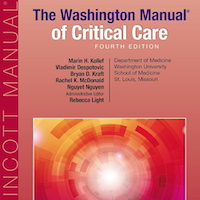
The Washington Manual of Critical Care 4th Edition
Part of the popular Washington Manual® handbook series, The Washington Manual of Critical Care provides concise, high-yield content that reflects today’s fast-changing advances in the field. Edited by Drs. Marin H. Kollef,... read more
Lower or Higher Oxygenation Targets in the ICU
This study reported no overall differences comparing a PaO2 target of 8–12 kPa on mortality or days alive without life support in 90 days. Subgroup analyses suggested heterogeneity of treatment effects (HTE) in patients... read more
Tailoring Antithrombotic Treatment in Patients with Acute Myocardial Infarction and Cancer
For more than two decades, dual platelet antiplatelet therapy (DAPT) has been one of the mainstays in the treatment of patients who have suffered an acute myocardial infarction (AMI) or undergoing percutaneous coronary intervention... read more