What to Know About Merkel Cell Carcinoma, the Rare Cancer that Killed Jimmy Buffett
"Margaritaville" singer Jimmy Buffett died of Merkel cell carcinoma, a rare but aggressive form of skin cancer, according to a tribute posted on his official websiteopens in a new tab or window. The 76-year-old music icon... read more
The Hemodynamics of Adrenal Veins with Four-dimensional CT Using Quantitative Time-density Curve
Present study quantitatively analyzed adrenal venous flow using four-dimensional computed tomography (4D CT). We reviewed 4D CT images of 55 patients [mean age, 52 years ± 11 (standard deviation); 23 females] who underwent... read more
Urine Output-based Sepsis-associated AKI: Clinical Implications
This paper offers comprehensive insights into the epidemiology of acute kidney injury (AKI), and we commend the authors for their significant contribution. They revealed an increase in the number of mild cases among AKI stage... read more
Acute Undifferentiated Fever with Thrombocytopenia: Clinical and Etiological Profile
Prompt recognition and management of thrombocytopenia in acute undifferentiated fever are vital. Thrombocytopenia, along with organ dysfunction and shock, significantly influence patient outcomes. Tailored interventions based... read more
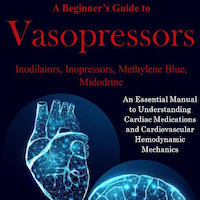
A Beginner’s Guide to Vasopressors: Inodilators, Inopressors, Methylene Blue, Midodrine: An Essential Manual to Understanding Cardiac Medications and Cardiovascular Hemodynamic Mechanics
The use of pressors and dilators are common in intensive care units, especially concerning the heart. With different mechanisms of action and titrations, it is essential to know how each of the drugs perform and the potential... read more
Epidemiology of Surgery Associated Acute Kidney Injury (EPIS-AKI)
In a comprehensive multinational study, approximately one in five patients develop PO-AKI after major surgery. Increasing severity of PO-AKI is associated with a progressive increase in adverse outcomes. Our findings indicate... read more
Back To The Future: ARDS Guidelines
In June 2023, Intensive Care Medicine published the European Society of Intensive Care Medicine (ESICM) practical guidelines for respiratory support in patients with acute respiratory distress syndrome (ARDS). This monumental... read more
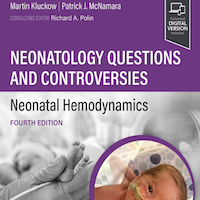
Neonatology Questions and Controversies: Neonatal Hemodynamics
Dr. Richard Polin's Neonatology Questions and Controversies series highlights the toughest challenges facing physicians and care providers in clinical practice, offering trustworthy guidance on up-to-date diagnostic and treatment... read more
Introduction to Hemodynamics
This book presents a bibliographical work on the modeling of blood dynamics. The first chapter describes the anatomy of the cardiovascular system and the functioning of the blood circulation. The second chapter is devoted... read more
Using Deep Neural Networks for Survival Prediction in VA-ECMO
Venoarterial extracorporeal membrane oxygenation (VA-ECMO) is a complex and high-risk life support modality used in severe cardiorespiratory failure. ECMO survival scores are used clinically for patient prognostication... read more
Anticoagulation in the ICU: Contact Pathway Inhibition Future
Bleeding and thrombotic complications are the main cause of morbidity and mortality in critically ill patients on the intensive care unit (ICU), receiving short-term percutaneous mechanical circulatory support (pMCS) by extracorporeal... read more
Microbial Endocrinology: Interkingdom Signaling in Infectious Disease and Health
This new edition highlights the numerous advances made in the field of microbial endocrinology over the last five years. Prominent among these new topics featured is the emergence of the microbiota-gut-brain axis and the... read more

A Promising Biomarker for Early Detection of Acute Coronary Syndrome (ACS)
As found in our study, among the biomarkers used, the diagnostic accuracy of IMA was the highest and better than that of cardiac troponin I and CK-MB. Although ECG is the preferred diagnostic tool for diagnosing ACS (STEMI,... read more
High-Sensitivity Troponin T in a Secondary Care Setting
High-sensitivity troponin (hs-cTn) assays play a crucial role in the early detection and management of patients with suspected acute coronary syndrome (ACS). This study supports evidence that serial troponin measurements... read more
Tracheal Intubation of Critically Ill Adults: Video vs. Direct Laryngoscopy
Successful intubation on the first attempt occurred in 600 out of 705 patients (85.1%) in the video-laryngoscope group and 504 out of 712 (70.8%) in the direct-laryngoscope group (ARR, 14.3%; 95% CI, 9.9 to 18.7; p... read more
Estimating Seroprevalence of COVID-19 Infection After Omicron Outbreak
This study aimed to investigate the seroprevalence of severe acute respiratory syndrome-coronavirus-2 (SARS-CoV-2) antibodies among individuals aged 18 years and older. Population-based study was conducted within the Arizona... read more
Hematologic Challenges in the Critically Ill
This volume provides a comprehensive overview of hematologic issues that clinicians regularly encounter in the critical care environment. The text features hematologic scenarios that affect the adult ICU patient, outlines... read more
PTSD, Workplace Trauma Lower Among First-Year Residents During COVID-19
Contrary to popular belief, rates of post-traumatic stress disorder (PTSD) and workplace trauma exposure was lower among first-year medical residents during the COVID-19 pandemic than in years prior, according to new research.1 In... read more
TXA Should be Urgently and Broadly Adopted for Brain Bleeds
Everything looked better with tranexamic acid (TXA), and none of it was statistically significant. True, in a subgroup analysis of patients who actually had a head bleed on imaging—which, gee whiz, seems like an important... read more
Sepsis Prediction Model for Determining Sepsis vs. SIRS, qSOFA, and SOFA
In this cohort study of 60,507 hospital admissions, we found that although the SPM marginally outperformed existing prediction scores in balanced accuracy for classification of sepsis, it suffers from poor timeliness, limiting... read more
Beware the Painless Pulmonary Embolism
Many EPs know that myocardial infarction can be painless in about 20 percent of cases but are unaware that the same is true of pulmonary embolism. Many conditions, in fact, that are typically quite painful are actually... read more
A Case of Chronic Mesenteric Ischemia Due to Celiac and Mesenteric Artery Thrombosis
Chronic mesenteric ischemia (CMI) is uncommon and accounts for approximately 5% of cases. CMI presents with non-specific symptoms, making it difficult to diagnose, and requires complex management involving interprofessional... read more