
Predicting the Next 48 Hours: Machine Learning Delivers Dynamic, Interpretable ICU Mortality Forecasts
The LGBM-48h algorithm provides a dynamic, clinically applicable, and interpretable framework for 48-hour ICU mortality risk prediction. By establishing mortality risk-based categories and showing how key features change... read more
Improving Critical Care Survivorship: A Guide to Prevention, Recovery, and Reintegration
This book, just published, provides a comprehensive overview of improving critical care survivorship. Comprised of four sections, the text presents interventions that can be used to improve patient outcomes and reduce the... read more
Precision Hydration: Causal Machine Learning Pinpoints Sepsis-AKI Patients Who Thrive on Less IV Fluid
The results of this study demonstrate that a causal machine learning (ML) framework can successfully identify patients with sepsis-AKI who benefit from a restrictive fluid strategy. This technology offers a promising, data-driven... read more
Sepsis’s Silent Heart Attack: Decoding and Targeting the Multi-Layered Cardiac Failure
This review synthesizes the current understanding of sepsis-induced myocardial dysfunction (SIMD), moving the field beyond supportive care toward precision therapies. While challenges remain in addressing the diverse nature... read more
Nursing Care and ECMO
This highly informative book provides essential insights for ICU nurses at ECMO centers around the world, who face the substantial challenges involved in the management of ECMO patients. Above all, it meets their training... read more
Pediatric ECMO Survivors Show Subtle but Significant Decline in Quality of Life and Physical Function
Pediatric ECMO survivors often experience slight but persistent reductions in their health-related quality of life compared to other critically ill PICU survivors, with the most notable impact seen in physical functioning.... read more
ICU Readmission Prediction Using Deep Learning Models
This systematic review provides the first comprehensive synthesis of the literature on the application of deep learning (DL) models to the task of predicting ICU readmission, offering insights into current approaches and... read more
Sepsis, Hemoglobin, and Harm: Transfusions Hurt When Hemoglobin Hits 10g/dL
Red Blood Cell (RBC) transfusions are common in septic patients, but this study highlights the potential for harm at higher hemoglobin (Hgb) levels. Although they may be physiologically guided up to an Hgb of 9-10g/dL, the... read more
The Norepinephrine Salt Shaker: It’s Not the Formulation, It’s the Reporting
All commercially available norepinephrine salt formulations are clinically equivalent. The critical focus for researchers and clinicians must shift from debating the formulation to ensuring clear and standardized reporting... read more
REGULATE Trial: Norepinephrine vs. Vasopressin – The Head-to-Heart Showdown in Severe TBI
REGULATE is the first adequately powered trial to systematically compare these vasopressor strategies in severe TBI. The results are expected to provide an evidence-based foundation for developing individualized vasopressor... read more
The Double Danger: Electrolyte Chaos in AKI Drives Worse Outcomes
Electrolyte imbalances and metabolic acidosis are highly prevalent complications in Acute Kidney Injury (AKI) and are directly linked to adverse patient outcomes, including death and a greater need for intensive care. The... read more
The Antibiotic Balancing Act in ICU: Optimizing Use to Beat Resistance and Save Lives
The continuous fight against antibiotic resistance demands a routine and multidisciplinary strategy for antibiotic optimization in the ICU. Regular review and updating of these practices, based on local data on pathogens... read more
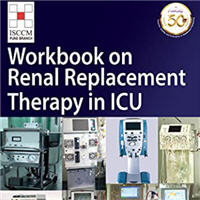
Workbook on Renal Replacement Therapy in ICU (ISCCM)
This workbook focuses on renal replacement therapy in ICU. The incidence of acute kidney injury in critically ill patients is increasing steeply. Acute kidney injury in this setting is associated with high morbidity and mortality.... read more
The MAP-SEPS Protocol: A New Frontier in Detecting Early Sepsis by Targeting Microcirculation
The MAP-SEPS trial is a prospective observational study designed to determine if a comprehensive, multimodal approach to peripheral perfusion monitoring can improve the early detection of sepsis and organ failure in critically... read more
The Power and Pitfalls of AI: GPT Masters ICU Prediction But Struggles with ED Discharge
This retrospective proof-of-concept study investigated GPT-4o's ability to predict disposition (admission vs. discharge) for high-acuity ED patients with complex respiratory cases who required pulmonology consultation and... read more
Epinephrine or Norepinephrine? The Vasoactive Face-Off in Pediatric Septic Shock
This prospective observational study compared the clinical outcomes of epinephrine (adrenaline) versus norepinephrine (noradrenaline) as the initial vasoactive agent in pediatric septic shock. Study Population: 68 children... read more
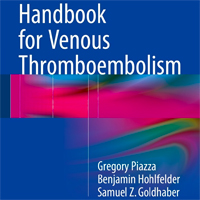
Handbook for Venous Thromboembolism
A truly practical guidebook for anyone who needs the key information on the diagnosis, management and prevention of venous thromboembolism. Specific areas of focus include understanding the risk factors for VTE and the role... read more
Beyond SOFA: Sepsis ImmunoScore Redefines Risk Stratification for Mortality and ICU Admission
This multicenter observational study involving over 6,000 adult patients found that the Sepsis ImmunoScore, an AI-based tool, significantly outperformed six conventional clinical scores and biomarkers in predicting sepsis,... read more
Medication Management: Spontaneous vs. Traumatic Intracerebral Hemorrhage (sICH vs. tICH)
Pharmacological management for BP control and seizure prophylaxis differs between tICH and sICH. ICH etiology should be accounted for in determining appropriate BP goals and the necessity of seizure prophylaxis. Intracerebral... read more
Handbook of Intravenous Fluids
This easy to use pocket book covers all aspects of intravenous fluid therapy in critically ill patients from applied physiology to bedside clinical management succinctly. It includes updated and evidence-based content on... read more
Lactate Fails to Boost Predictive Power in Post-Op Cardiac Patients
This retrospective study analyzed over 2,500 adult patients to determine if lactate dynamics—including clearance time, trend, and maximum level—offer incremental value in predicting poor outcomes after cardiac surgery,... read more
Septic Shock MAP Targets: Homogeneous Response, Heterogeneous Harm
This study, which analyzed 776 patients with septic shock, found that overall, there was no significant difference in the response (no heterogeneity) to different blood pressure targets, particularly concerning the primary... read more