Improving Access to ECMO for OHCA
Mobile teams using transport accessibility frameworks and principles can significantly improve patient access for out-of-hospital cardiac arrest (OHCA) compared to in-hospital extracorporeal cardiopulmonary resuscitation... read more
Remote Ischemic Conditioning in Septic Shock
The treatment known as RECO did not significantly reduce the severity of organ failure as measured by the mean daily SOFA (sequential organ failure assessment) score from the start of the study to day 4 in patients with septic... read more
Molnupiravir Improves Recovery Time in COVID-19 Patients at High Risk of Severe Outcomes
This analysis of a large randomized trial involving people who are at high risk of experiencing severe outcomes from COVID-19 and who had been vaccinated against SARS-CoV-2 infection found that adding molnupiravir to usual... read more
China: Nearly 250 million people might be infected with COVID-19
According to a leaked government document that has been circulating on social media, it is estimated that up to 248 million people in China may have been infected with COVID-19 since control measures were lifted. This... read more
Heterogeneity in Pediatric ARDS: Challenges and Complexities in Diagnosis and Treatment
Pediatric intensive care physicians are well-acquainted with the concept of heterogeneity, as the patients, pathologies, and treatments they encounter can vary greatly both within the pediatric intensive care unit and within... read more
Family Presence During Cardiac Arrest Resuscitation
This systematic review identified four key findings. Firstly, there was a lack of high-quality evidence on the impact of family presence during resuscitation on patient outcomes. Secondly, family members had varied... read more
Adapting FDA Regulation for AI-Powered Medical Devices
To keep up with the advancement of medical technology, the FDA has been working on a digital health pre-certification program that would allow the agency to pre-approve trusted manufacturers to update their software products.... read more
ECMO During COVID-19 Collaborative Survey
This collaborative survey done by the Society of Thoracic Surgeons/Extracorporeal Life Support Organization highlights several key changes in ECMO utilization and practice in North America: programs performing >20 VV ECMO... read more
Pronation Improves Respiratory Outcomes in Neonates with Respiratory Failure
This study found that 6-hour periods of pronation (lying on the stomach) can improve gas exchange and lung function in neonates (newborn infants) with three types of respiratory failure, without causing any negative effects... read more
Clarifying the Fictions Surrounding Sepsis: Strategies for Improved Management and Outcomes
It is important to clarify the myths surrounding sepsis and to provide a clear understanding of the condition. This can help set realistic expectations about outcomes and inform effective strategies for managing sepsis, including... read more
Time from Infiltrate on Chest Radiograph to VV ECMO in COVID-19 Affects Mortality
Venovenous extracorporeal membrane oxygenation (VV ECMO) has been used to treat severe coronavirus disease 2019 (COVID-19) acute respiratory distress syndrome; however, patient selection criteria have evolved throughout the... read more
Blood-Pressure Targets in Comatose Survivors of Cardiac Arrest
Targeting a mean arterial blood pressure of 77 mm Hg or 63 mm Hg in patients who had been resuscitated from cardiac arrest did not result in significantly different percentages of patients dying or having severe disability... read more
Bayesian Reanalysis of the Standard vs. Accelerated Initiation of RRT in AKI Trial
Timing of initiation of kidney-replacement therapy (KRT) in critically ill patients remains controversial. The Standard versus Accelerated Initiation of Renal-Replacement Therapy (RRT) in Acute Kidney Injury (STARRT-AKI)... read more
Use of Cardiac POCUS in Diagnosis of HFrEF in a Patient with Ischemic Stroke
Ischemic strokes in younger adults, those 18 to 50 years old, account for approximately 10% to 15% of all ischemic strokes. Risk factors for stroke between younger and older patients tend to be similar. Younger patients... read more
Making Sense of Lung Function Tests
Respiratory problems are the most common cause of acute admission to hospital. A variety of diagnostic investigations are required, both for acute and clinic assessment. Making Sense of Lung Function Tests, Second Edition... read more
Association Between Oxygen Desaturation Index and Cardiovascular Disease in Non-Sleepy SDB Subtype
In the Chinese community-dwelling population, non-sleepy sleep-disordered breathing (SDB) was highly prevalent. Oxygen desaturation index (ODI), an easily extracted indicator from a type IV sleep monitor, most strongly reflected... read more
Acid-Base Disorders in the Critically III Patient
Acid-base disorders are common in the intensive care unit. By utilizing a systematic approach to their diagnosis, it is easy to identify both simple and mixed disturbances. These disorders are divided into four major categories:... read more
Extracorporeal Membrane Oxygenation for Adults
This new edition presents an evidence-based review of extracorporeal membrane oxygenation (ECMO) for adults, with a particular focus on veno-venous (VV) ECMO. Due to the dramatic impact of COVID-19, the number of institutions... read more
Algorithm to Predict Thromboembolism in COVID-19 Patients
Patients with COVID-19 are at increased risk for thrombosis and might be stratified on admission based on lower Pao2/FiO2 ratio, higher D-dimer levels and history of major hemorrhages. 64 thromboses were recorded in 54... read more
Pros and Cons of Disconnecting the Ventilator During Acute Respiratory Decompensation
Disconnecting the ventilator and manual BMV should be performed in cases where device malfunction is the primary cause of decompensation. These instances are quite rare. Disadvantages of switching to BMV include loss of... read more
Clinical Applications of Magnets on Cardiac Rhythm Management Devices
The growing indications for permanent pacemaker and implantable cardioverter defibrillator (ICD) implantation have increased the number of patients with these cardiac rhythm management devices (CRMDs). Cardiac rhythm... read more
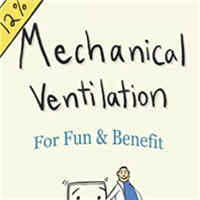
Mechanical Ventilation: For Fun and Benefit
Illustrated and explained simply this book is for anyone that works in an intensive care unit - residents, pulmonary/critical care fellows, therapists, or nurses who wants a better understanding of mechanical ventilation. Easy... read more