Multicomponent Sepsis Transition Effect and Recovery Program After Sepsis
In a multisite randomized clinical trial of patients hospitalized with sepsis, patients provided with a 30-day program using a nurse navigator to provide best practices for postsepsis care experienced a lower proportion of... read more
Early COVID-19 Treatment with SARS-CoV-2 Neutralizing Antibody Sotrovimab
Among high-risk patients with mild-to-moderate COVID-19, sotrovimab reduced the risk of disease progression. No safety signals were identified. The results of this interim analysis of COMET-ICE indicate that sotrovimab... read more
Differential Dynamics of Peripheral Immune Responses to Acute COVID-19 Infection in Older Adults
In this study, peripheral blood mononuclear cells from young and old patients with COVID-19 were examined phenotypically, transcriptionally and functionally to reveal age-, time- and severity-specific adaptations. Gene... read more
Risk of Death in Hospitalised COVID‐19 Patients Is Not Reduced by Azithromycin Treatment
The effect of antibiotics with potential antiviral and anti‐inflammatory properties are being investigated in clinical trials as treatment for COVID‐19. We are certain that risk of death in hospitalised COVID‐19... read more
ABCDEF Bundle Implementation for ICU Patients During the COVID-19
Regardless of COVID-19 infection status, implementation rates for the ABCDEF bundle, for each element individually and an ICU diary were extremely low for patients without and with COVID-19 infections during the pandemic.... read more
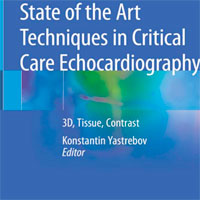
State of the Art Techniques in Critical Care Echocardiography
This book covers all aspects of modern techniques used in the rapidly developing field of adult critical care echocardiography, 3D transthoracic and transesophageal echocardiography, myocardial tissue velocity and deformation... read more
CAPSID Randomized Trial Results for High-dose Convalescent Plasma in COVID-19 Patients
COVID-19 convalescent plasma (CCP) has been considered a treatment option for COVID-19. This trial assessed the efficacy of a neutralizing antibody containing high-dose CCP in hospitalized adults with COVID-19 requiring respiratory... read more
ARDS vs. PseudoARDS – Failure of the Berlin Definition
True ARDS might be defined as a histological diagnosis involving diffuse alveolar damage throughout the lungs (characterized by hyaline membrane formation and thickening of the alveolar walls). PseudoARDS refers to patients... read more
Impact on Mental, Physical and Cognitive functioning of a Critical care sTay during the COVID-19 pandemic
The ongoing pandemic could affect the duration, variety and severity of the mental, physical, and cognitive impairments intensive care unit (ICU) survivors and their families frequently present. We aim to determine the impact... read more
The Use of Different Sepsis Risk Stratification Tools Uncovers Different Mortality Risks
Our data suggest that the sepsis risk stratification tools currently utilized in emergency departments and on the general wards do not predict mortality adequately. This is illustrated by the disparity in mortality risk... read more
Neurological Complications After First Dose of COVID-19 Vaccines
Emerging reports of rare neurological complications associated with COVID-19 infection and vaccinations are leading to regulatory, clinical and public health concerns. We undertook a self-controlled case series study to investigate... read more
The Nexus Between Sleep Disturbance and Delirium Among Intensive Care Patients
Sleep in intensive care is hampered due to many factors; the clinical environment itself exacerbates sleep disturbance. Research suggests that interventions aimed at improving sleep quality have produced positive effects... read more
Prehospital FAST Reduces Admission Time and Treatment
The focused assessment with sonography in trauma (FAST) exam is an established trauma care diagnostic procedure. Ultrasound performed during prehospital care can improve early treatment and management of the patients. According... read more
Diaphragm Dysfunction After Cardiac Surgery
Symptomatic diaphragmatic dysfunction was found in 7.6% of patients after cardiac surgery. It led to an increase of respiratory complications, such as pneumonia, prolonged ventilation, and intensive care. Coronary bypass... read more
COVID-19 and Critical Illness Neuropathy
We have described COVID patients in the ICU with critical illness neuropathy (CIP). COVID-related CIP could have implications for the functional recovery and rehabilitation strategies. Nerve conduction studies showed a... read more
Kidney Imaging with Point-of-Care Doppler Ultrasonography
We read with great interest the article by Caroli et al., in which they meticulously discuss the role of imaging in elucidating both structural and functional aspects of kidney disease. Herein, we would like to briefly comment... read more
Changes in Barriers to Implementing Early Mobilization in the ICU
This study was undertaken to investigate the rate of mobilization, defined as a rehabilitation level of sitting on the edge of a bed or higher, and its association with changes in barriers in the intensive care unit (ICU).... read more
Interhospital Transfer of COVID-19 Patients Treated with High-flow Nasal Oxygen Therapy
At the start of the COVID-19 pandemic, early intubation was recommended on the basis of worldwide observations of severe hypoxemia. However, some patients were ultimately able to benefit from high-flow nasal cannula (HFNC)... read more
Effect of Moderate vs Mild Therapeutic Hypothermia on Mortality and Neurologic Outcomes in Comatose Survivors of Out-of-Hospital Cardiac Arrest
In comatose survivors of out-of-hospital cardiac arrest, a target temperature of 31 °C did not significantly reduce the rate of death or poor neurologic outcome at 180 days compared with a target temperature of 34 °C. However,... read more
Emerging Advances have the Potential to Change the Future of Sepsis Care
In recent years, many advances in the sepsis literature have occurred, including new definitions, changes to the Surviving Sepsis Campaign (SSC) bundles, new pharmacologic agents, and adjunct treatments. There are also... read more
Pre-hospital suPAR, Lactate and CRP Measurements for Decision-making
Pre-hospital suPAR measurements alone or combined with C-reactive protein (CRP) and/or lactate measurements could not predict the ED discharge or hospital admission of 109 non-urgent EMS patients with non-specific chief complaints... read more
CCSC Encourage Flu Shots Amid COVID-19 Spread
The members of the Critical Care Societies Collaborative (CCSC), which includes the American Association of Critical-Care Nurses (AACN), American College of Chest Physicians (CHEST), American Thoracic Society (ATS), and Society... read more